The Question Every Homeowner Asks
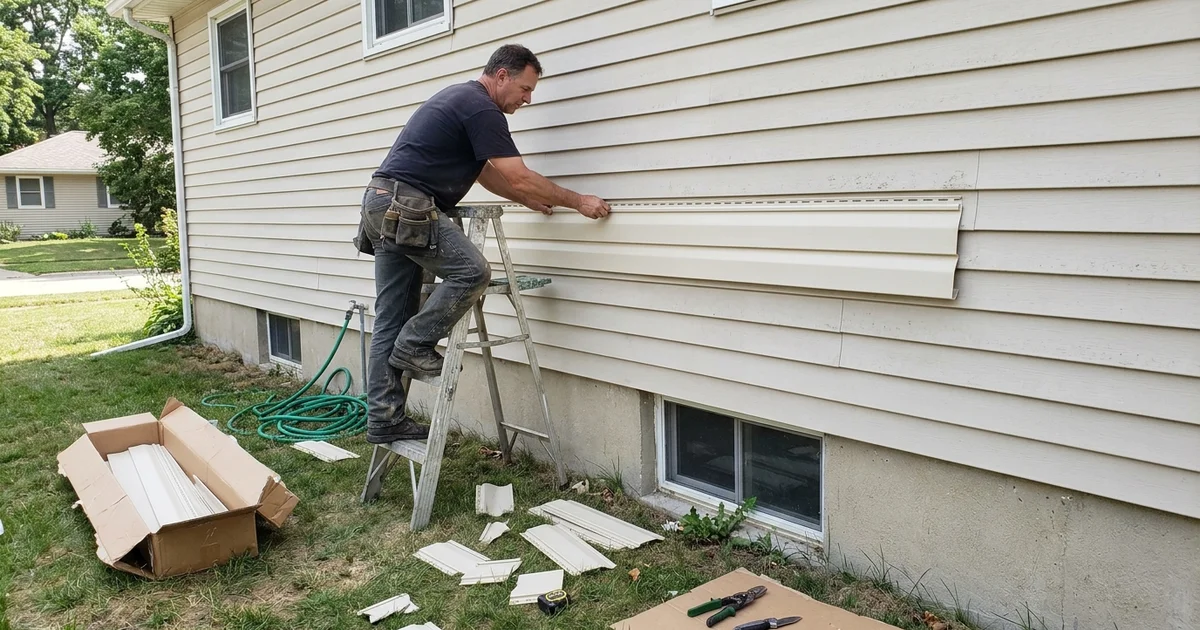
You’ve got cracked panels, a few rotted boards or a section that blew loose. Two contractors gave you two different answers. In the siding repair vs replacement debate, the wall behind the siding usually decides it, not the siding itself.
We’d rather fix a few siding boards than sell you a whole house of siding you don’t need. Whenever a siding repair is enough, you’ll hear that from us, and the same goes for when it isn’t.
This guide shows how we make that call, so you can make it with us instead of taking anyone’s word for it. First we’ll cover when a repair is enough. Then we’ll cover when replacement wins, how the costs compare and what to do if you’re stuck in the middle.
Our stance
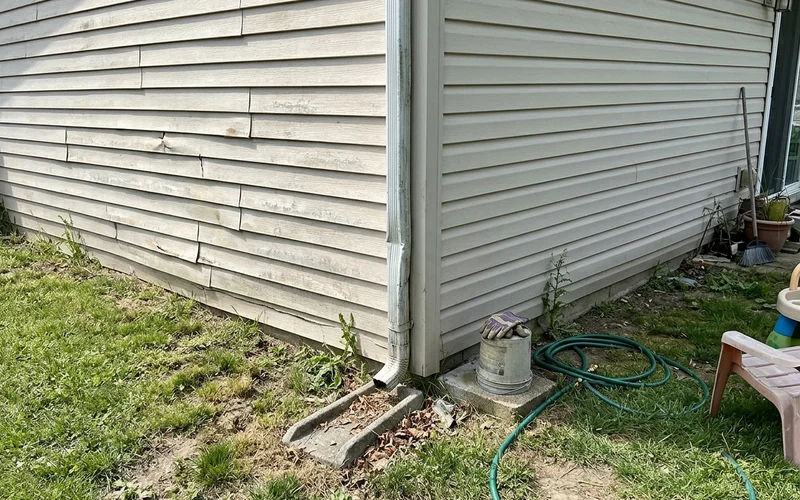
If the damage is local, the wall behind it is sound, and we can match the material, we repair it and leave the good siding alone.
When Repair Is Usually Enough
A repair is usually enough when the damage is local, the wall behind it is sound and the new material matches the old. All three need to be true:
- The damage is local. A few cracked panels by the driveway, a section torn loose in a storm, a couple of rotted boards under one window. If the problem is in one or two spots, it’s a repair. One contractor guide puts the rough line at damage on about 10% of the siding or less.
- The wall behind it is sound. When we open the damaged area, the house wrap is intact and the sheathing is dry and solid. A moisture meter or an awl will tell us fast, since soft wood or high readings point to water that has been getting in for a while. If there’s a little soft wood, we can usually fix that too while the wall is open.
- We can match the material. That means a close color and profile match on vinyl, the same reveal on fiber cement, a matching profile on wood. Older siding is the tricky part. Sun fades vinyl over the years, and manufacturers discontinue colors and profiles, so a brand-new panel may not blend with a 15-year-old wall. We’ll tell you up front how close it will look.
Age matters too. Home Genius Exteriors notes that siding under roughly 10 to 15 years old is a good repair candidate.
When all three check out, a repair costs a fraction of new siding and the house looks whole again.
When Replacement Makes More Sense
Replacement makes more sense when the problem is the whole system, not one spot. Here’s what pushes us that way:
- Widespread damage. Cracking, warping, rot or loose siding on most walls, not one corner.
- Failing wrap or flashing across the house. If water is getting in on several walls, patching panels won’t stop it. The wall needs to be opened and rebuilt from the sheathing out.
- Brittle, end-of-life material. Old vinyl that cracks when you touch it, or wood that won’t hold paint anywhere. Vinyl typically lasts 20 to 40 years according to Home Genius Exteriors, and cheaper grades often land at the short end of that range. Michigan winters, with their repeated freeze-thaw cycles, are hard on aging vinyl.
- No reasonable match. If a repair on a front wall would look like a patch from the street and there’s no good way around it.
- Repeat repairs. If you’re fixing something every spring, the money is better spent once on siding replacement.
Fiber cement is a different story. Brands like James Hardie, Nichiha and Allura typically carry 30-year warranties. If your fiber cement is nearing that mark and the paint is failing everywhere, treat that as a warning sign too.
Side-by-Side: Repair vs. Replacement
Repair fits isolated damage on a sound wall. Replacement fits failure across most of the house. Here’s how the two compare:
| Repair | Replacement | |
|---|---|---|
| Best when | Damage is in one or two areas | Damage or failure is across most walls |
| Typical damage share | About 10% of the siding or less | Widespread, on most walls |
| Typical siding age | Roughly 10 to 15 years old or newer | 20 years old or more |
| What’s fixed | Damaged panels or boards, wrap behind them | Every wall down to the sheathing |
| Wall check | Only where it’s opened | Every wall, during tear-off |
| Look | Closest available match | All new, one color and profile |
| Cost logic | Priced by pieces, height and matching | Priced by wall area, material, stories and trim |
| Disruption | Hours to a few days | Longer, depending on house size and weather |
The age and damage-share rows are rules of thumb from contractor guides, not hard laws. A 12-year-old wall with a failed flashing detail can still need more than a patch.
We don’t put dollar figures on a web page, because they’d be wrong for your house. Our guide on siding repair cost in Michigan explains what drives the price of a repair.
The Cost Logic
Repairs cost less up front, but small jobs still carry fixed costs. Repairs are priced by how many pieces come out, how high they are, what it takes to match them and whether there’s damage behind them. Even small repairs carry setup costs: travel, ladders, materials and the time to match colors. So a handful of scattered repairs can add up.
Replacement is priced by wall area, material, stories, trim and tear-off. It’s a much bigger number, but it resets the clock on every wall and fixes the wrap and flashing everywhere.
The math tips toward replacement when the repairs needed this year, plus the ones you can see coming in the next few, start to approach a real share of the cost of new siding. Good Life Construction frames the tipping point the same way: when repair cost gets close to replacement cost, replacing wins. We’ll lay both options out at the estimate so you can see where that line falls for your house.
Repair Now, Replace Later
A solid repair now can bridge you to a full replacement when the timing and budget fit. This works best if your siding is getting old but most of it is holding up. Good reasons to go this route:
- You’re selling in a few years.
- You’re planning an addition that will disturb a wall anyway.
- You want to spread out the spending without letting water in.
Replacement does pay off at resale, so selling soon doesn’t automatically mean replacing now. Zonda’s 2025 Cost vs. Value report found homeowners recouped between 97% and 114% of the cost of new vinyl or fiber cement siding. For a house that’s only partly worn, a clean repair often does the job until you’ve decided.
Not Sure Which Side You’re On?
If you’re asking “should I replace my siding?”, start with this: one bad spot is a repair, a bad house is a replacement, and anything in between deserves a closer look. For a sense of how much life your siding has left, read how long siding lasts in Michigan.
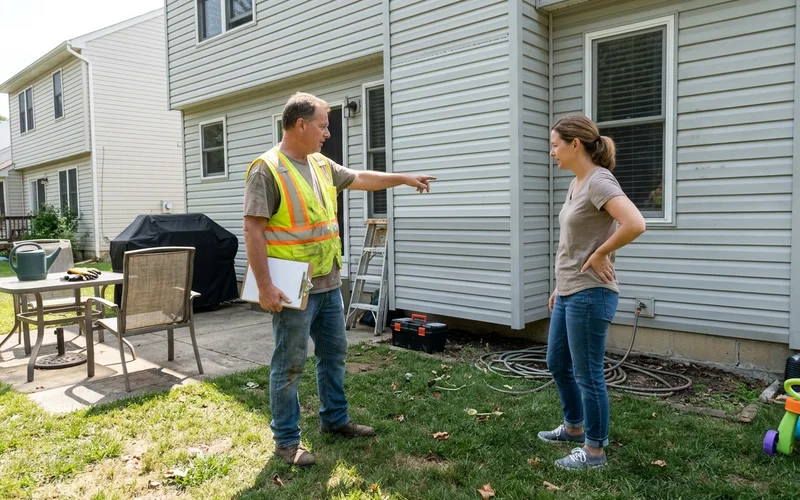
Then get a free estimate from our siding contractors in Grand Rapids. We’ll check the walls, tell you which way we’d go and why, and put both options in writing if they’re close.