What Is Fiber Cement Siding?
Want siding that looks like painted wood but doesn’t rot when the snow piles up? That’s the appeal of fiber cement siding in Grand Rapids.
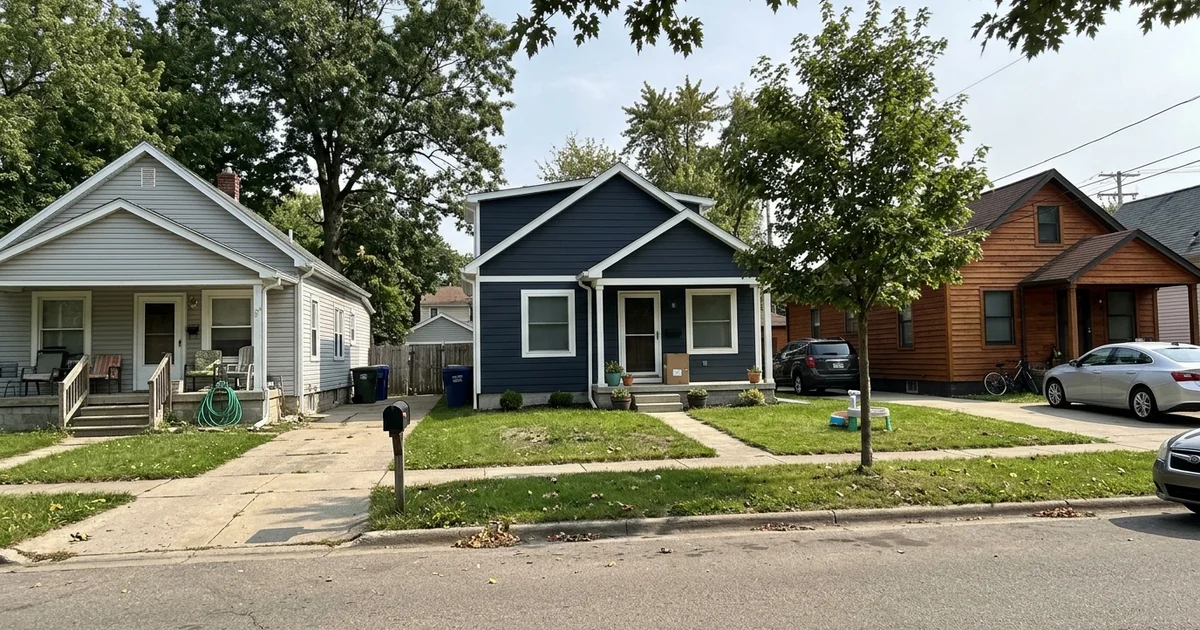
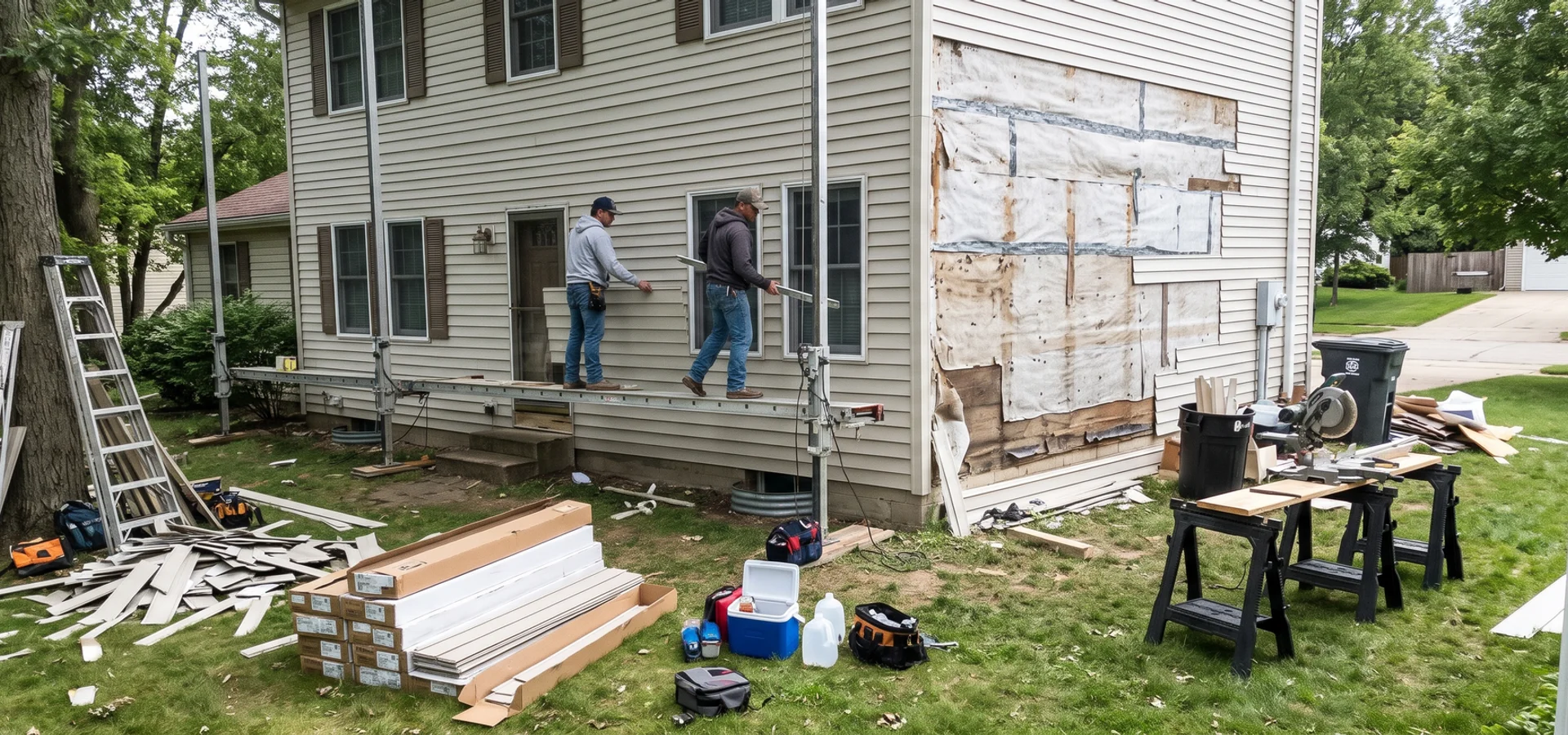
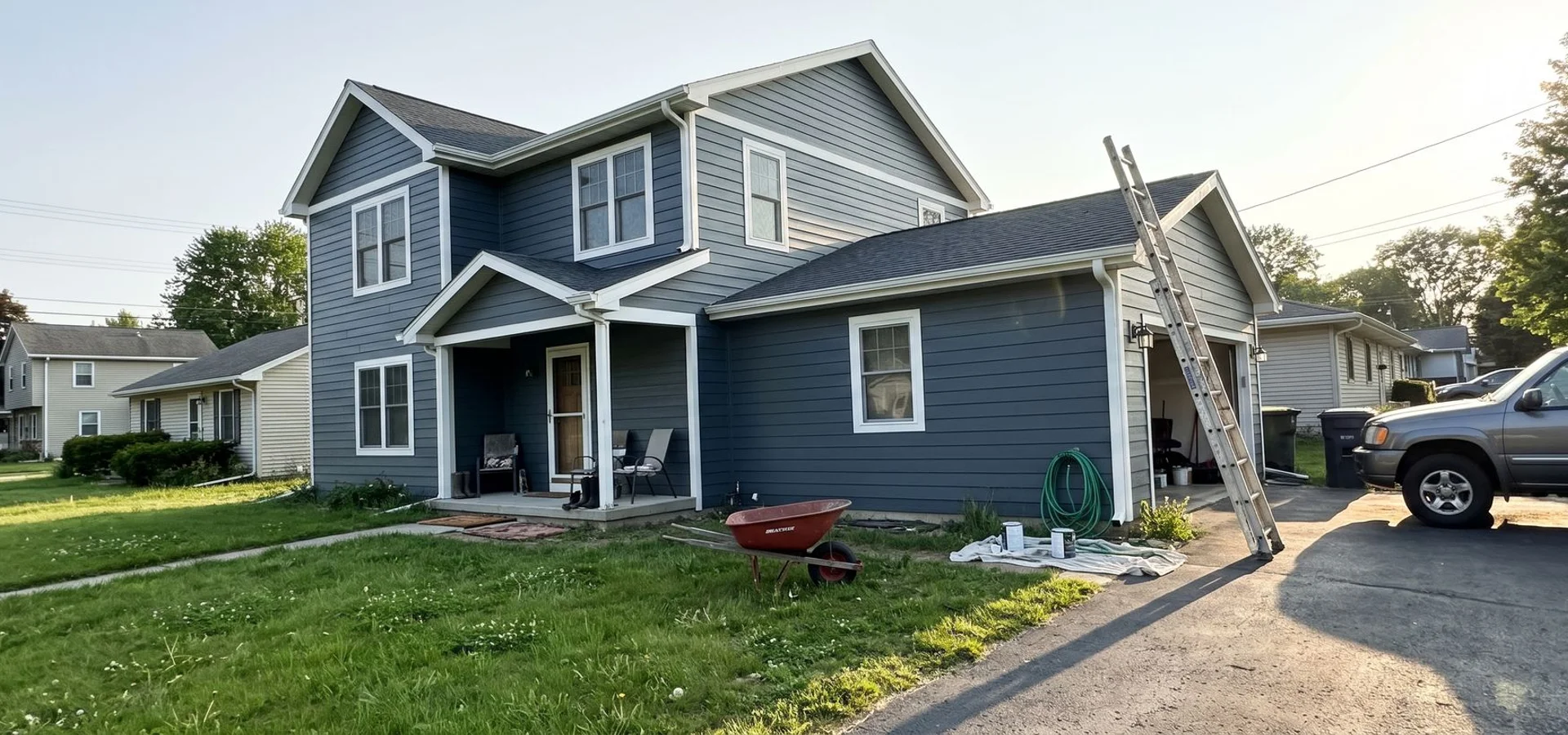
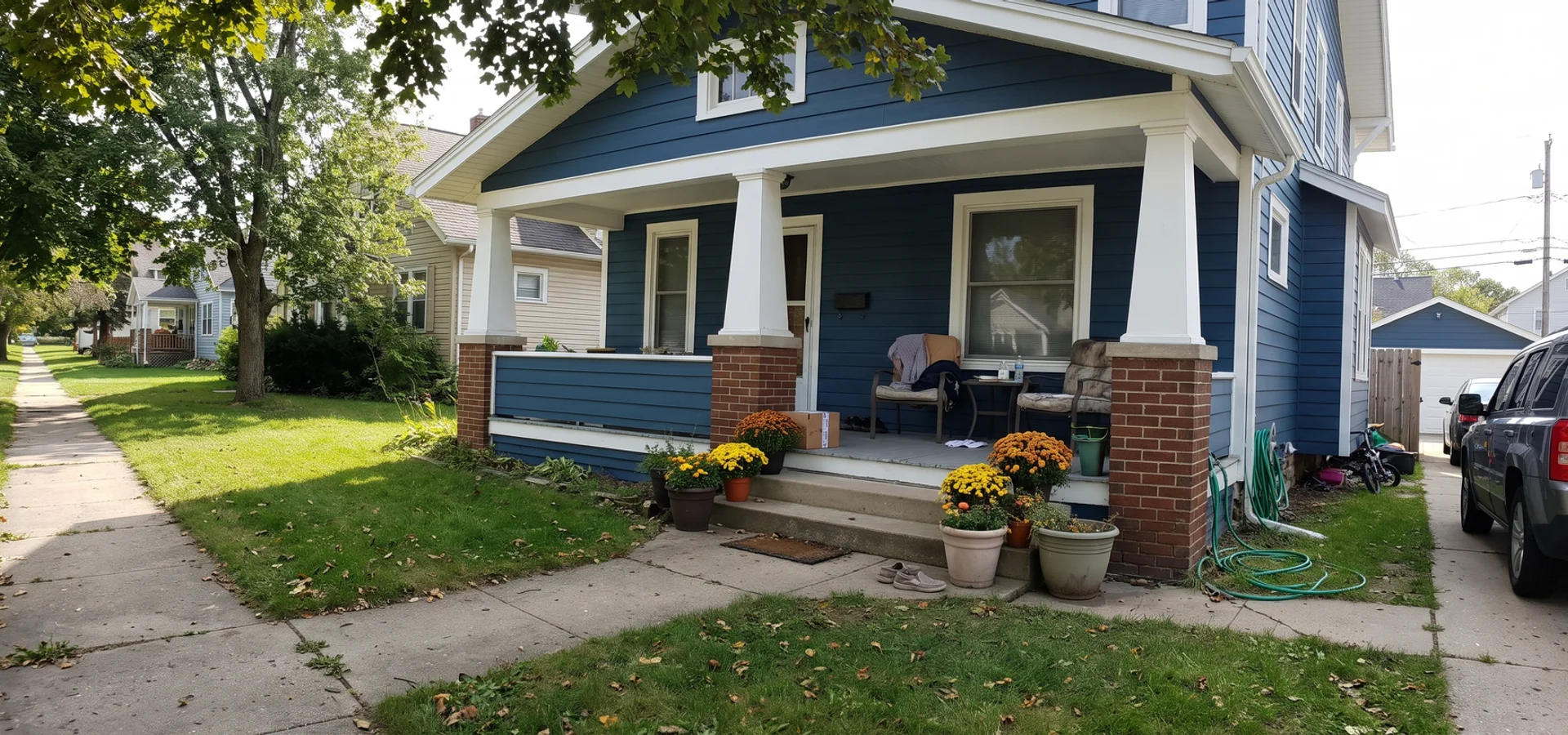
Fiber cement is a siding board made from cement, sand and wood fibers. It gives you the look of painted wood lap siding on a material that doesn’t rot, doesn’t attract insects and holds its shape through Michigan winters. As a Grand Rapids siding contractor, we install lap siding and panels with the clearances and joint flashing the material needs, then finish it with factory color or field paint to suit the house.
West Michigan is tough on exterior walls. Grand Rapids gets roughly 64 to 72 inches of snow a year, according to Brace Homes, compared with a national average of about 28 inches. Siding here deals with lake-effect snow, slush and repeated freezing and thawing.
You’ll hear people call it “Hardie board” after HardiePlank, one well-known brand. Whatever the brand, fiber cement lap siding has a few things going for it on West Michigan houses:
- Dimensional stability. The boards don’t swell and shrink much with the seasons.
- Freeze-thaw resistance. It’s strong when the edges are protected.
- Non-combustible cladding. James Hardie says its fiber cement is verified noncombustible under ASTM E136 and carries a Class A fire rating, which some homeowners care about.
Factory Finish or Field Paint?
Fiber cement comes two ways:
- Factory-primed / factory finish. Boards arrive painted or primed from the factory. Factory-finished color is baked on under controlled conditions and usually holds its color longer than paint applied on site.
- Primed for field paint. Boards go up primed and get painted after install. You get any color you want, and the paint job can be redone down the road like any painted house.
Factory finishes come with real paper behind them. James Hardie’s ColorPlus finishes carry a 15-year limited warranty covering paint and labor against peeling, cracking and chipping. The boards themselves carry a 30-year, non-prorated warranty.
| Factory finish | Primed for field paint | |
|---|---|---|
| Color choice | Manufacturer’s palette | Any color you can mix |
| Where it’s applied | In the factory | On your house |
| Repaint later | Yes, with field paint | Yes, like any painted house |
Either way, fiber cement does need paint eventually, and the caulk joints need checking along the way. We’ll talk through which finish fits your house and your patience for upkeep.
How Do You Install Fiber Cement So It Lasts?
Fiber cement doesn’t fail in the middle of the board. It fails at the edges, when water sits against cut ends. So most of the work is about keeping edges dry:
- Blind nailing. Lap boards are nailed near the top so the next course hides the nails.
- Joint flashing. A small piece of flashing goes behind every butt joint where two boards meet end to end.
- 2-inch roofline clearance. Boards stop short of shingles where a wall meets a roof, so they don’t sit in melting snow. James Hardie’s install instructions call for a 1 to 2 inch gap here.
- 6-inch grade clearance. Boards stay up off the soil, mulch and concrete so they don’t wick water.
- Caulk joints at trim are sealed with a paintable sealant.
Here’s a tip from the field. Skipping flashing at the butt joints is a shortcut that rarely shows up on day one. It shows up a few winters later as swollen, soft edges.
Cutting Fiber Cement Safely
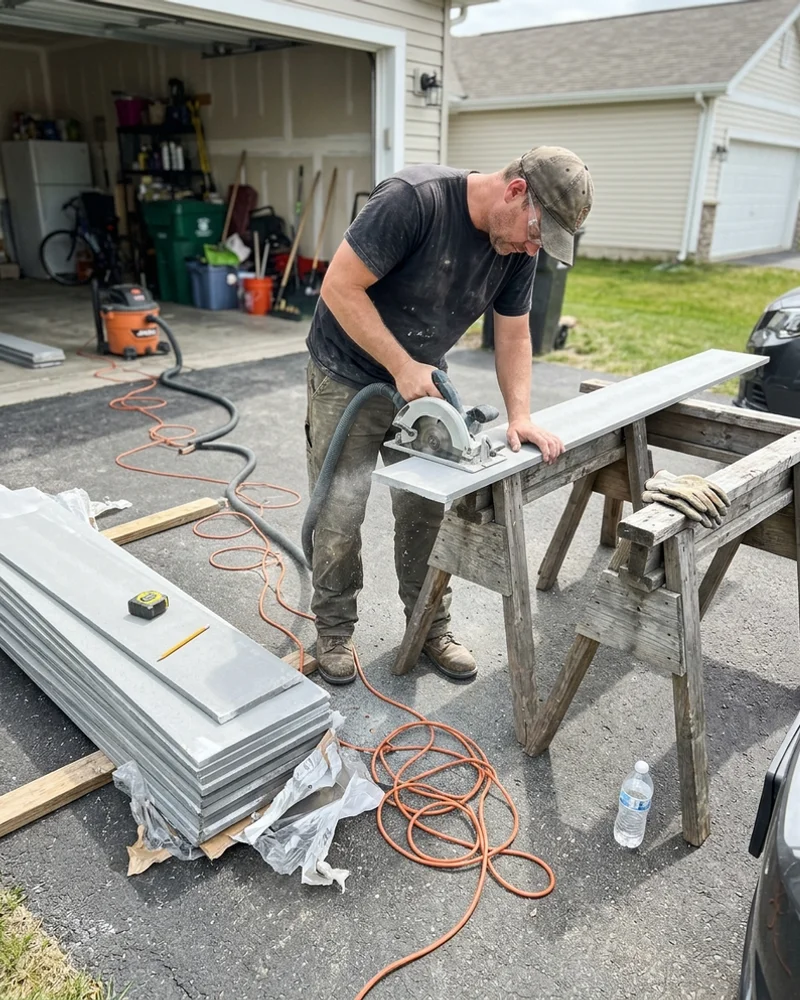
Cutting fiber cement creates fine silica dust. It’s a real health issue, not just a mess.
A NIOSH survey of fiber cement siding work found that cutting with power saws can push crystalline silica exposure past recommended limits. OSHA’s construction silica standard (29 CFR 1926.1153) lists vacuum dust collection as an accepted control. OSHA’s fact sheet says the vacuum should have a filter that’s at least 99 percent efficient.
So we use silica dust control on every job:
- Dust-collecting saws
- Cutting outdoors, away from open windows
- Cleanup as we go
Fiber Cement Repairs
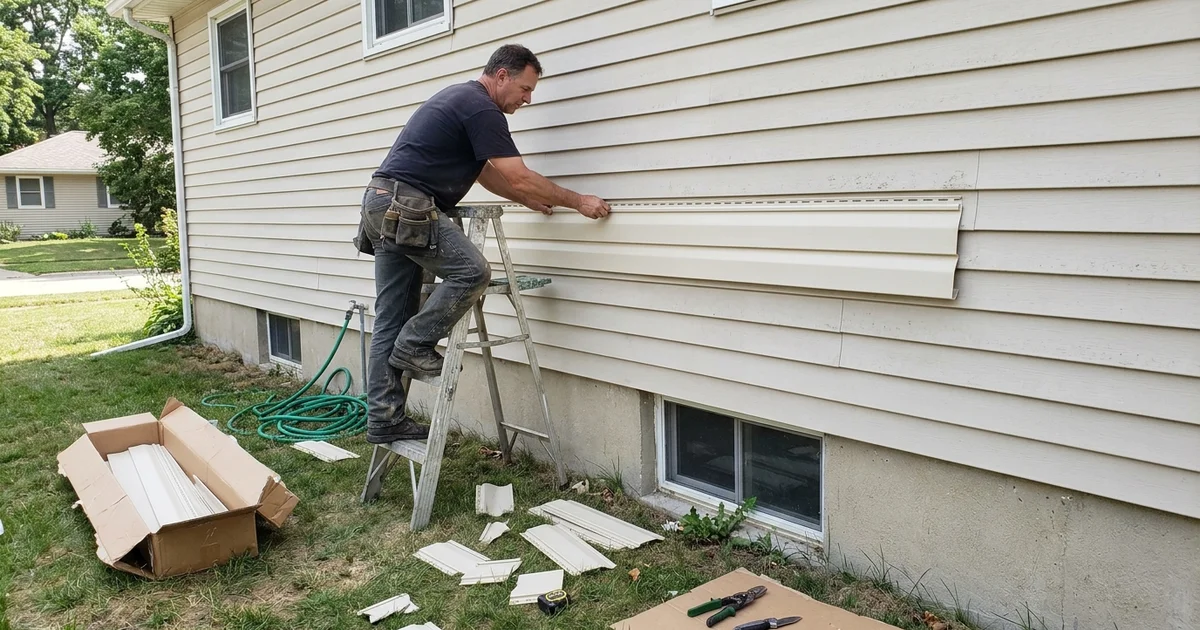
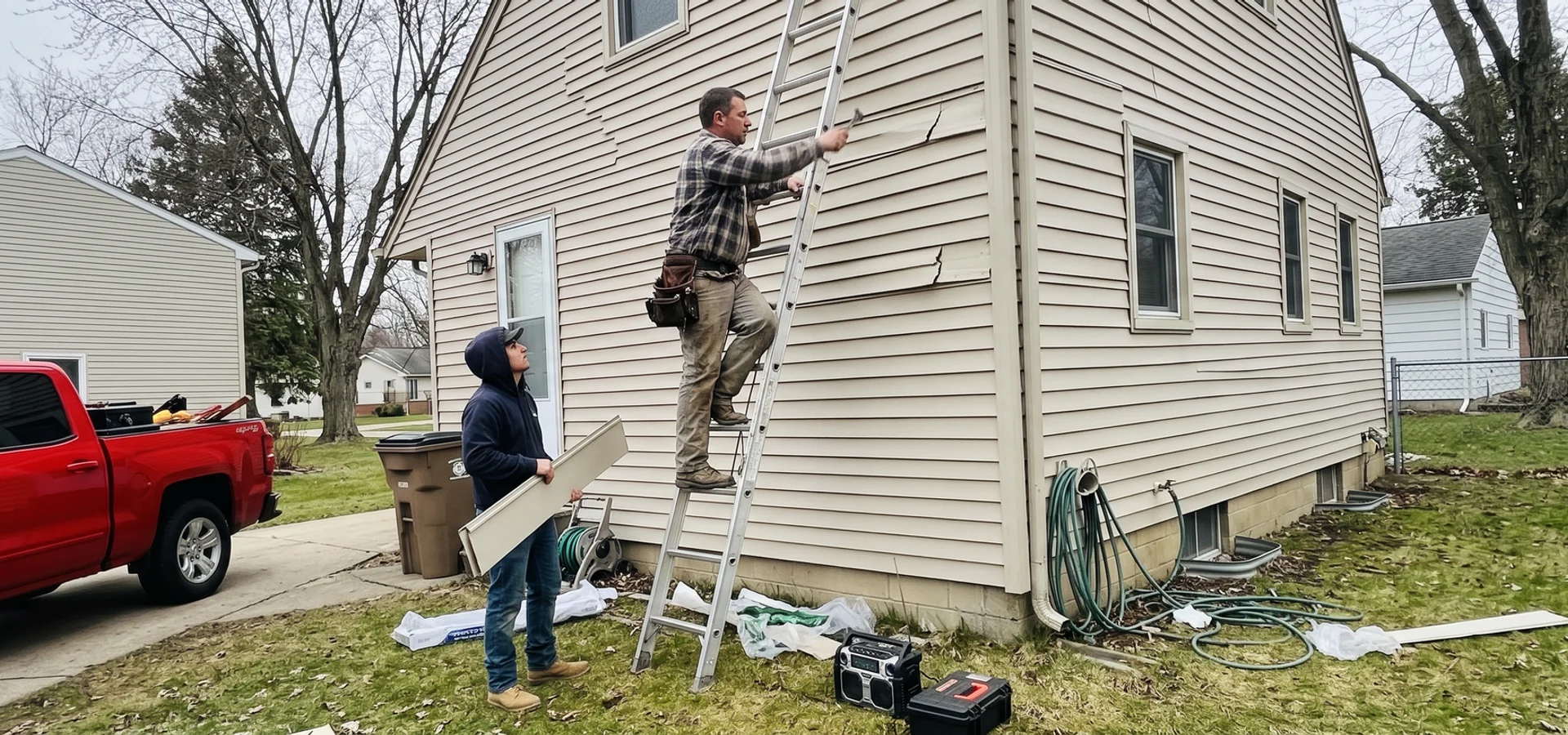
Already have fiber cement? Broken or damaged planks can be replaced one at a time and painted to blend with the wall. We check behind the damage while the board is out, the same way we do for every siding repair.
Cracked boards, failed caulk and soft edges often point to a water problem. Finding the source now can save you from replacing more boards later.
Is Fiber Cement Right for Your House?
Fiber cement generally costs more than vinyl and needs more upkeep. In return you get a heavier, more solid wall with a painted-wood look.
Angi puts installed vinyl at $3 to $12 per square foot and fiber cement at $5 to $14. The gap can pay you back later. The Cost vs Value 2025 report found fiber cement replacement siding recovered about 128% of its cost at resale.
Here’s how to sort out your choice:
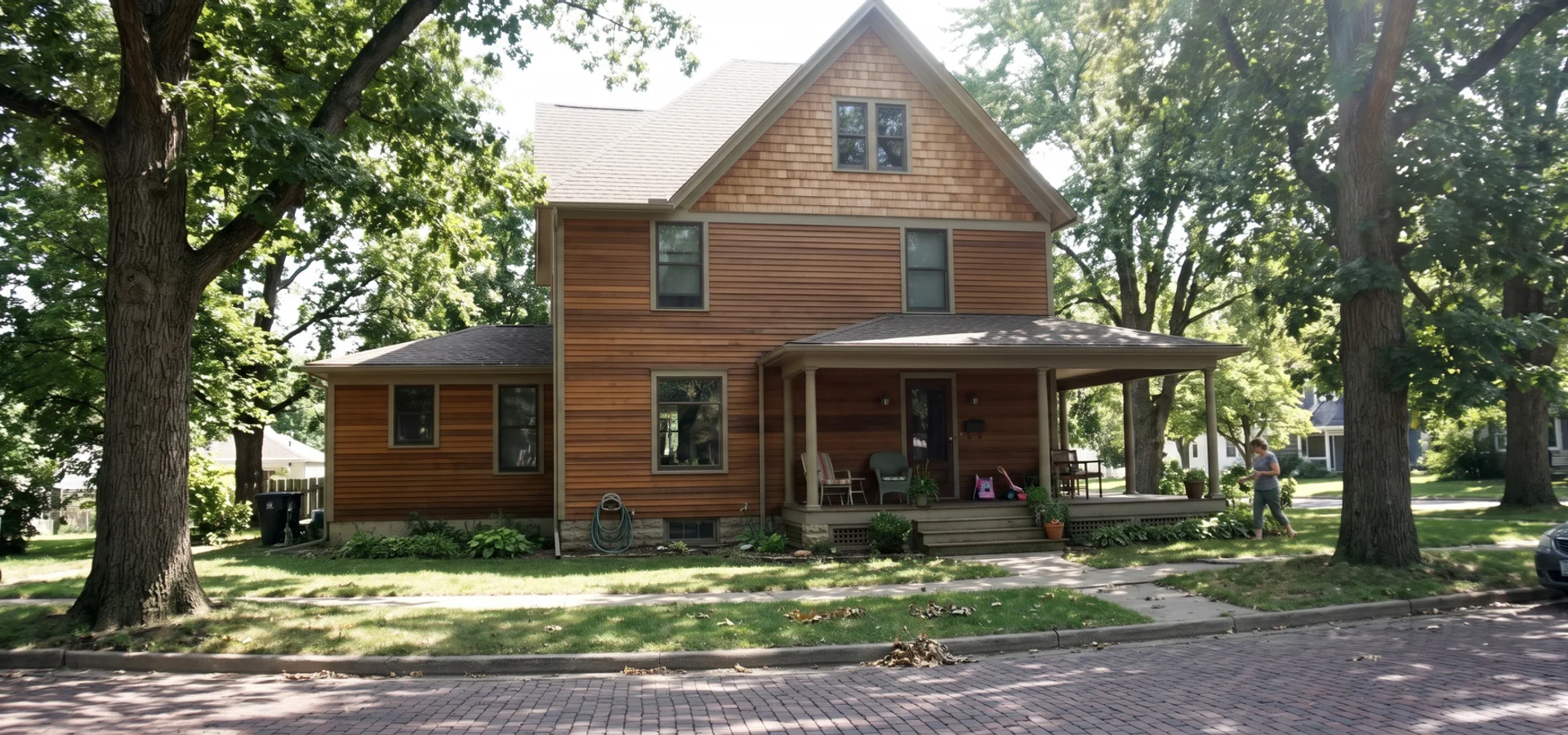
- If you love real wood grain and don’t mind staining, wood and cedar siding might suit you better.
- If low upkeep and cost come first, look at vinyl siding.
- If you want a painted-wood look and a sturdier wall, fiber cement is worth a close look.
Our material comparison guide lays all three side by side. Still deciding on fiber cement siding in Grand Rapids? Reach out for an estimate, and we’ll walk your house with you.