What Does Siding Repair Cover?
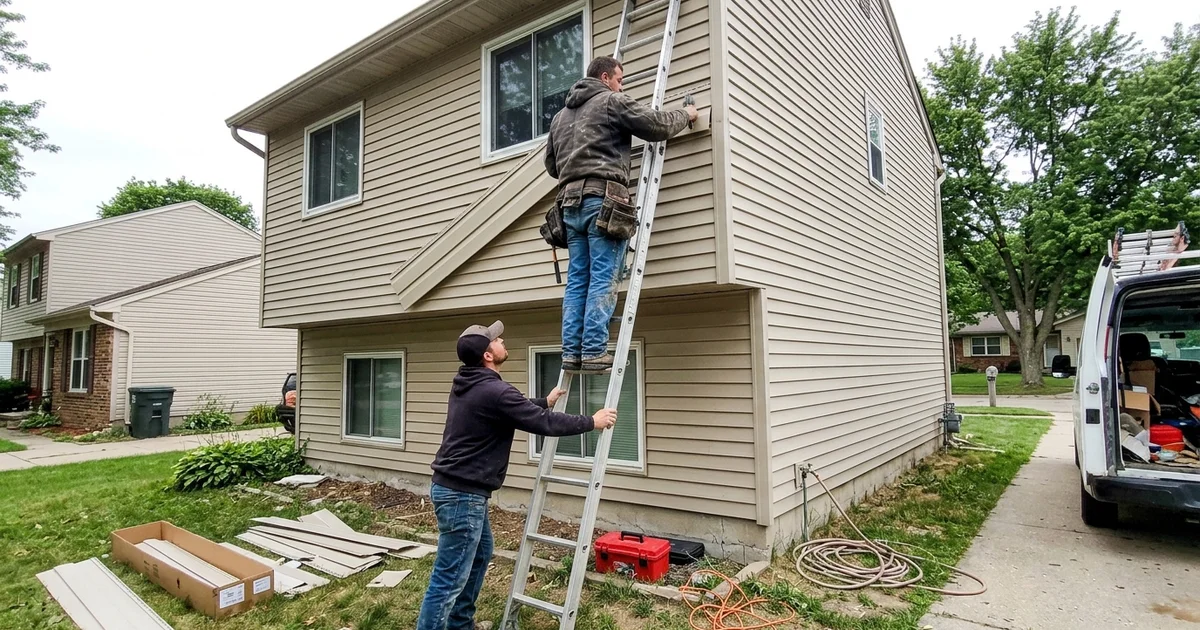
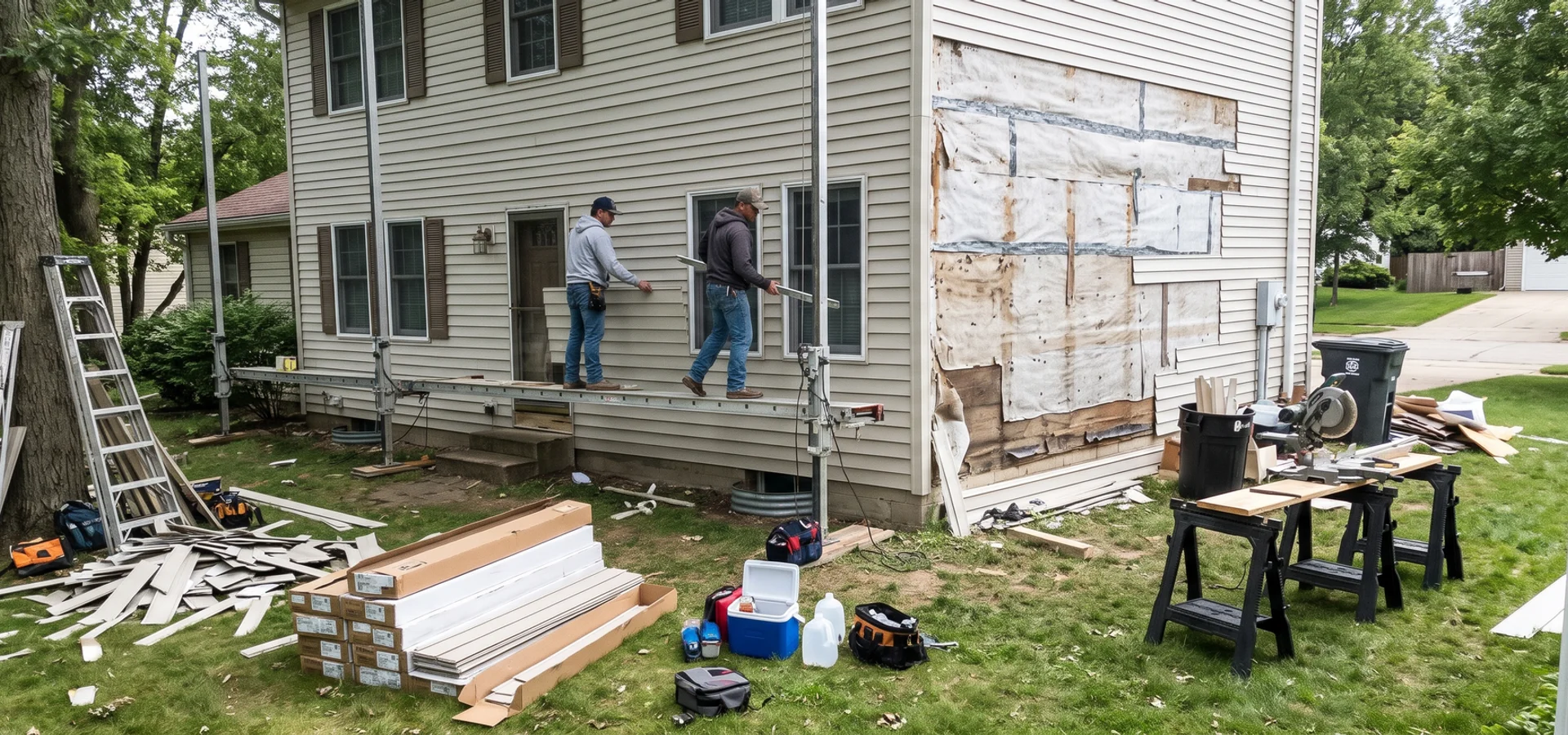
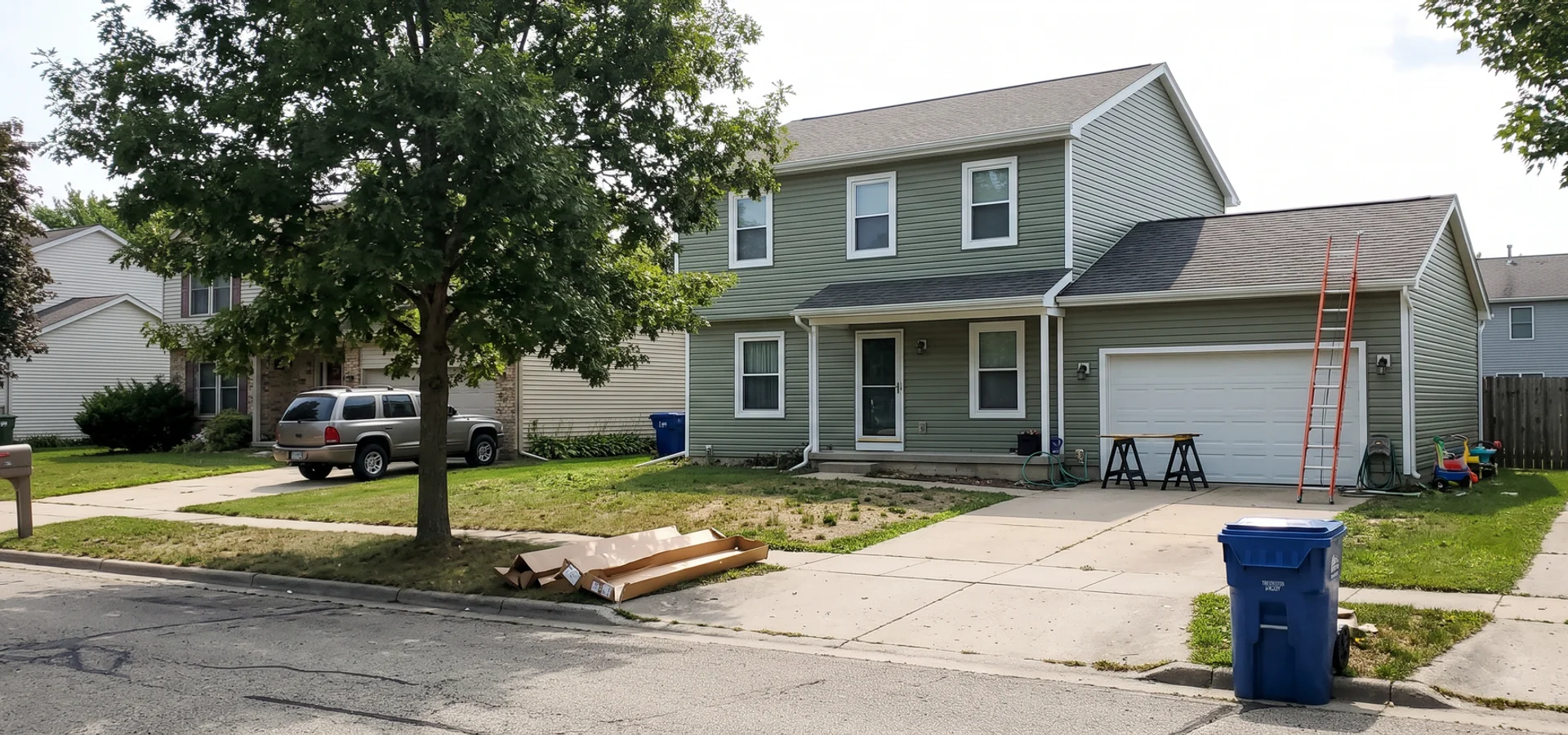
Did another company tell you your whole house needs new siding? Most of the time, it doesn’t. Siding repair in Grand Rapids usually means fixing a few bad spots, not tearing off every wall.
Here’s what we fix:
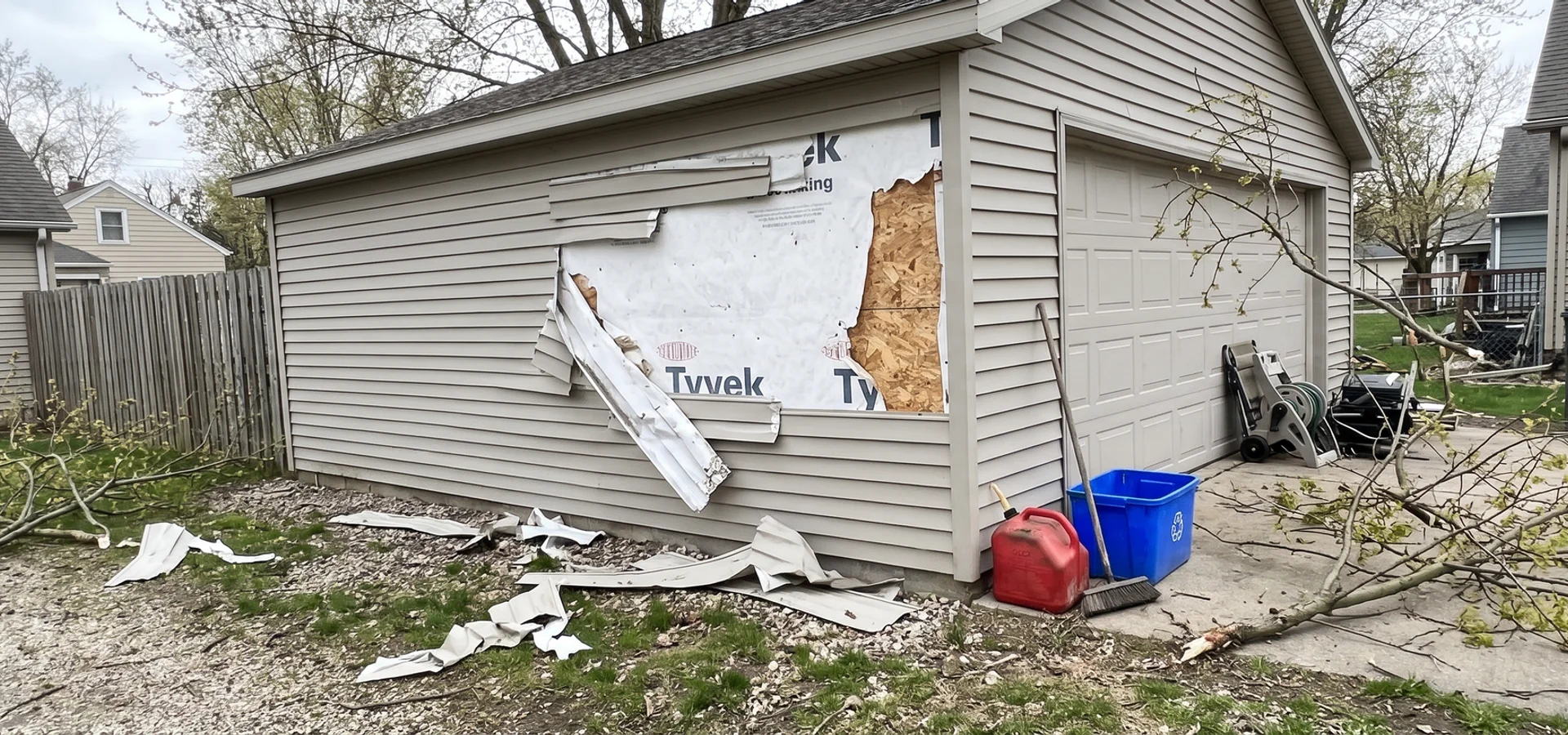
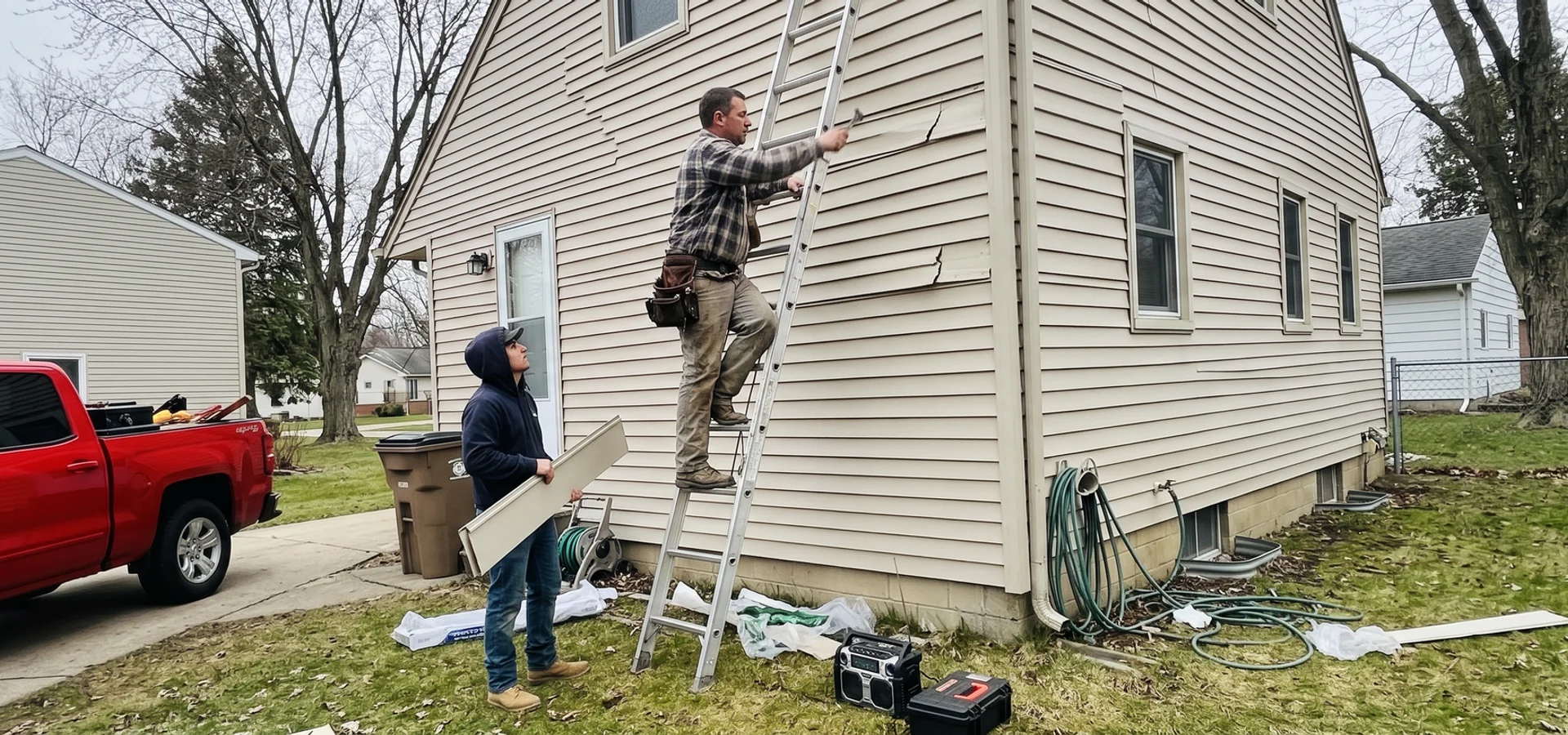
- Cracked, loose, and missing vinyl panels
- Broken fiber cement planks
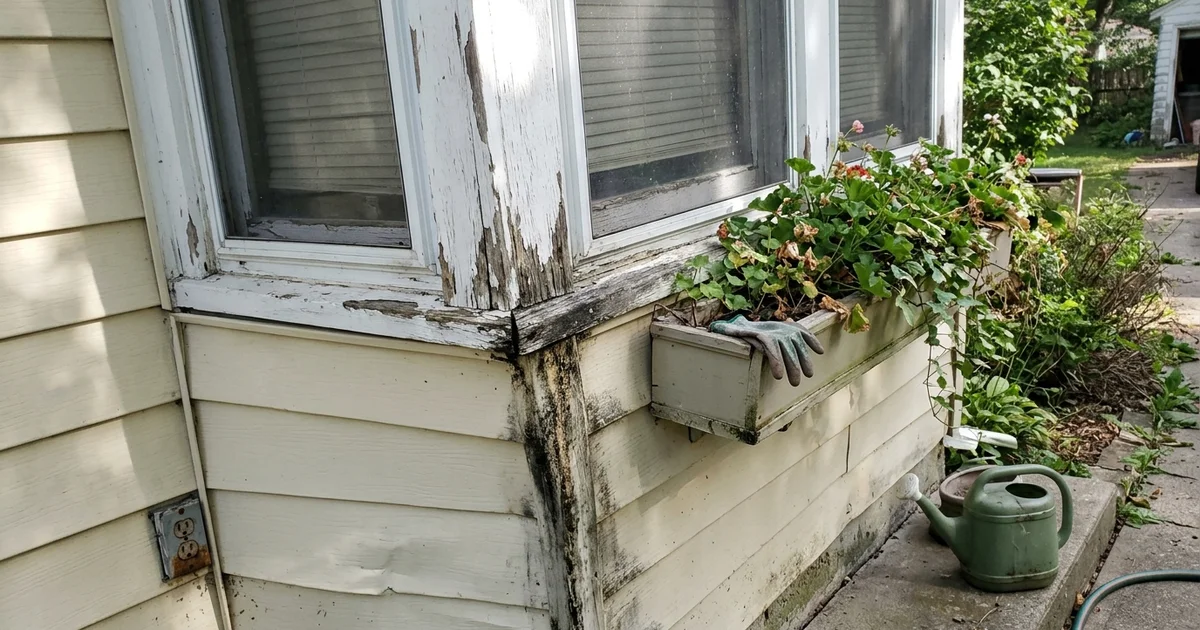
- Split or rotted wood boards
While the wall is open, we check what’s underneath. If the rest of your siding is in good shape, it stays put.
That’s the whole idea behind how we work as a Grand Rapids siding contractor. A lot of Grand Rapids homeowners call us after another company told them they need all new siding. Sometimes that’s true. Often it isn’t.
Local weather is hard on exteriors. Brace Homes reports that Grand Rapids gets 64 to 72 inches of snow a year, thanks to lake-effect storms off Lake Michigan. The national average is about 28 inches. We’ll tell you straight when a repair is enough and when it isn’t.
How Do You Repair Vinyl Siding?
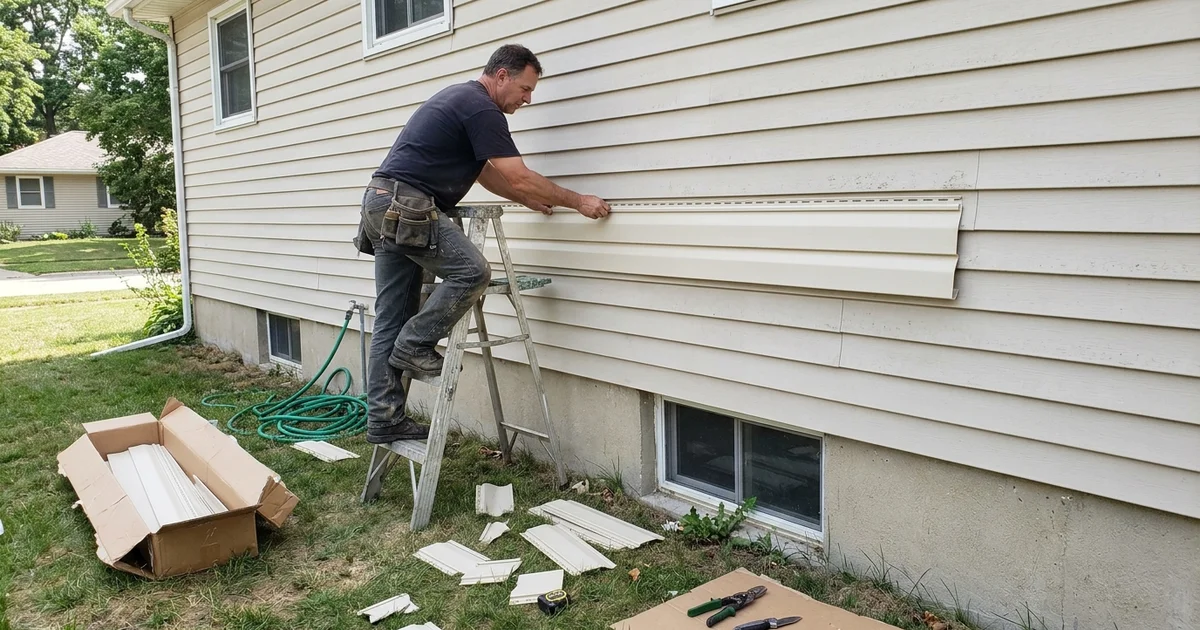
Vinyl panels lock into each other along the bottom edge. Here’s how a typical fix goes:
- Use a siding zip tool to unlock the course above the damage. This exposes the nail hem of the damaged panel.
- Pull the nails.
- Slide the bad piece out.
- Slide the new piece in.
- Nail it in the center of the slots, not tight against the wall.
That last step matters most. Vinyl needs a thermal expansion gap so it can grow in summer and shrink in winter. The Vinyl Siding Institute’s installation manual calls for about 1/32 inch of space under the nail head, roughly the thickness of a dime.
Nail it too tight and you get buckling and warping a few months later. That’s one of the most common problems we fix on other people’s work.
Matching matters too. Vinyl suffers color fading and oxidation, especially on south and west walls. A brand-new panel next to years-old siding rarely looks identical, so we look for the closest color and profile available and tell you up front how close it will look.
How Do You Repair Fiber Cement and Wood Siding?
Fiber cement and wood are repaired a board at a time. The steps look like this:
- Cut out the damaged board
- Check the wall behind it
- Fit a new board with the same reveal
- Prime the new board
- Seal the caulk joints
- Paint the repair to match
Fiber cement lap siding is usually blind nailed, so the nails hide under the next course up. James Hardie, the maker of HardiePlank, lists blind nailing as the preferred method for its lap siding. It gives you a cleaner look, with no nail heads showing.
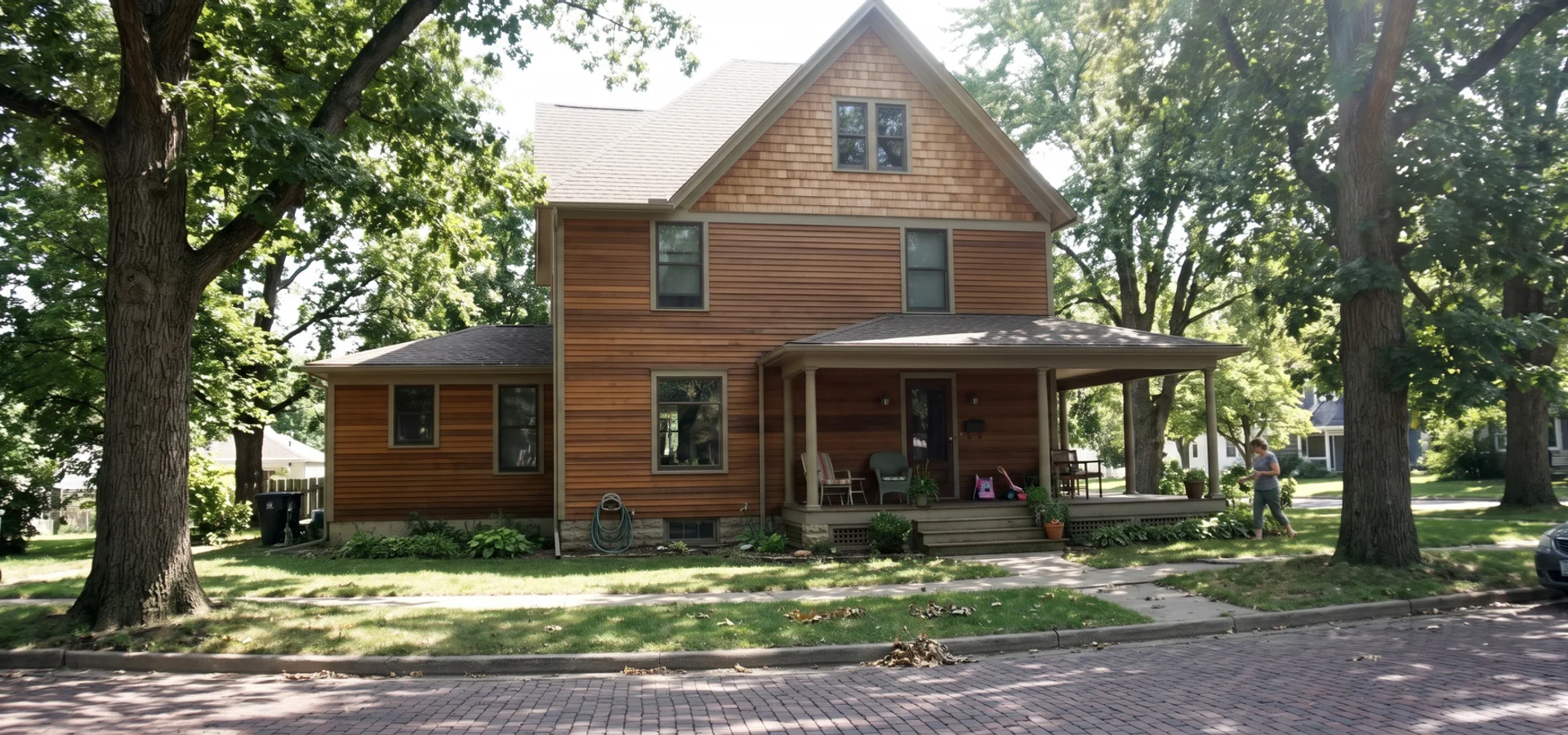
For older wood siding, we match the profile as closely as we can. Our wood and cedar siding page goes deeper on board-by-board work for older homes.
Why Check Behind the Damage?
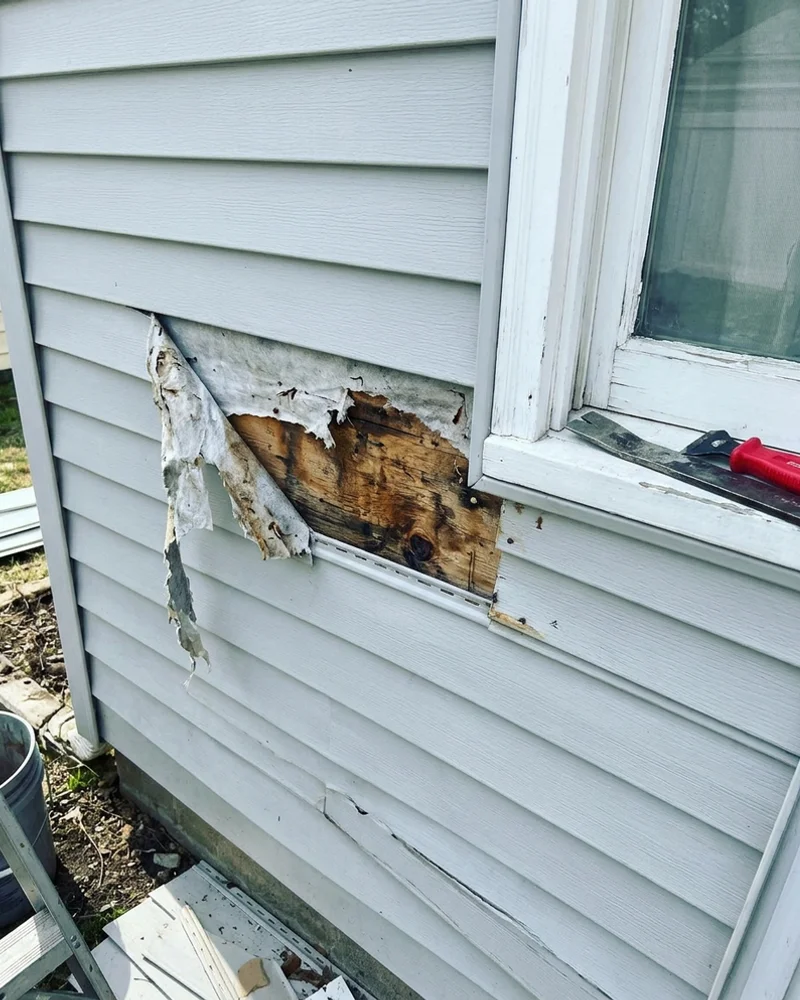
A cracked panel is sometimes just a cracked panel. Other times it’s the first thing you can see of a bigger problem. Water that gets past the siding can soak the house wrap and cause sheathing dry rot that spreads quietly.
So while the wall is open, we look. Here’s what we check:
- The house wrap
- The flashing integration around windows and trim
- The OSB substrate
- The weep holes at the bottom of vinyl courses
Those tiny holes let water that gets behind the siding drain out. Tall Pines Roofing warns that painting over them can trap moisture right where it does the most harm.
If something is wet or soft, we show you before we fix it and tell you what it adds to the price. Exterior contractors often point to spongy spots, warped panels, and a musty smell as signs that water is already inside the wall. Our guide on signs of water damage behind siding covers what to look for between visits.
Repair or Replace?
Spot replacement makes sense when the damage is in one area, the wall behind it is sound, and we can match the material. Here’s the quick version:
| What we find | Usually the better move |
|---|---|
| Damage in one area, sound wall, matching material available | Spot replacement |
| Cracking, rot, or failed wrap on most walls | A whole-house siding replacement |
| Wet or soft spots behind the siding | Fix the cause first, then repair or replace |
Money matters here, so check the numbers. Angi’s 2026 data puts professional siding repair at $367 to $1,525 on average, depending on material and how much is damaged. Once repairs start stacking up across several walls, replacement often becomes the smarter spend.
Read siding repair vs. replacement for how we make that call, and siding repair cost in Michigan for what drives the price.
Ready to find out where your home lands? Contact us for siding repair in Grand Rapids, and we’ll take a look and give you an honest answer.