What Is Whole-House Siding Replacement?
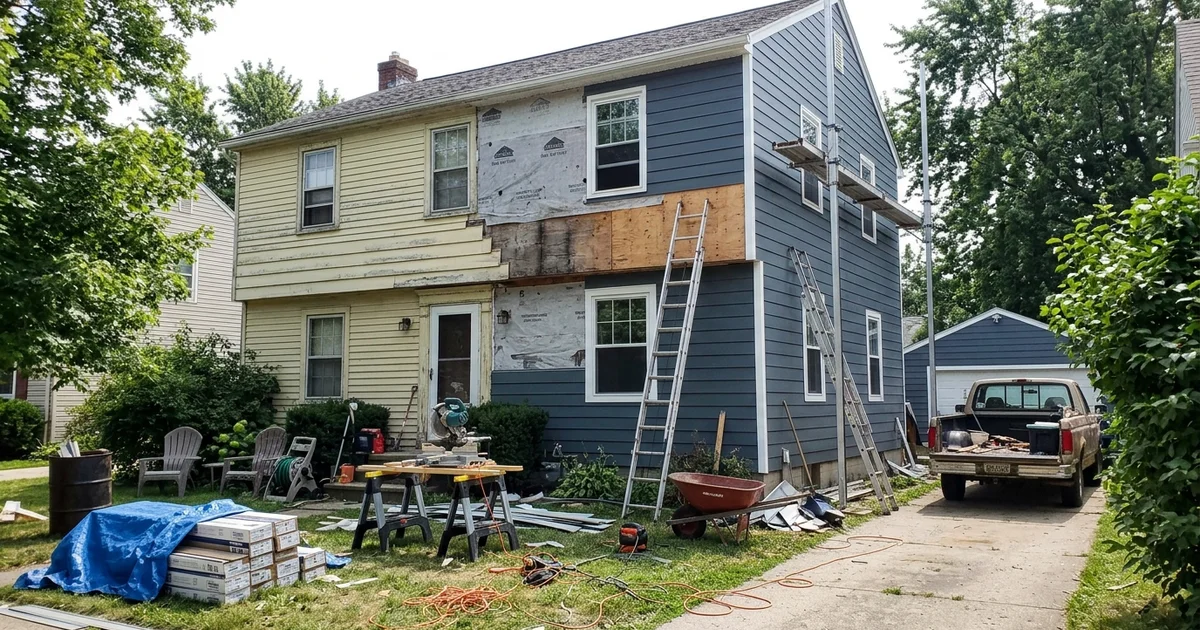
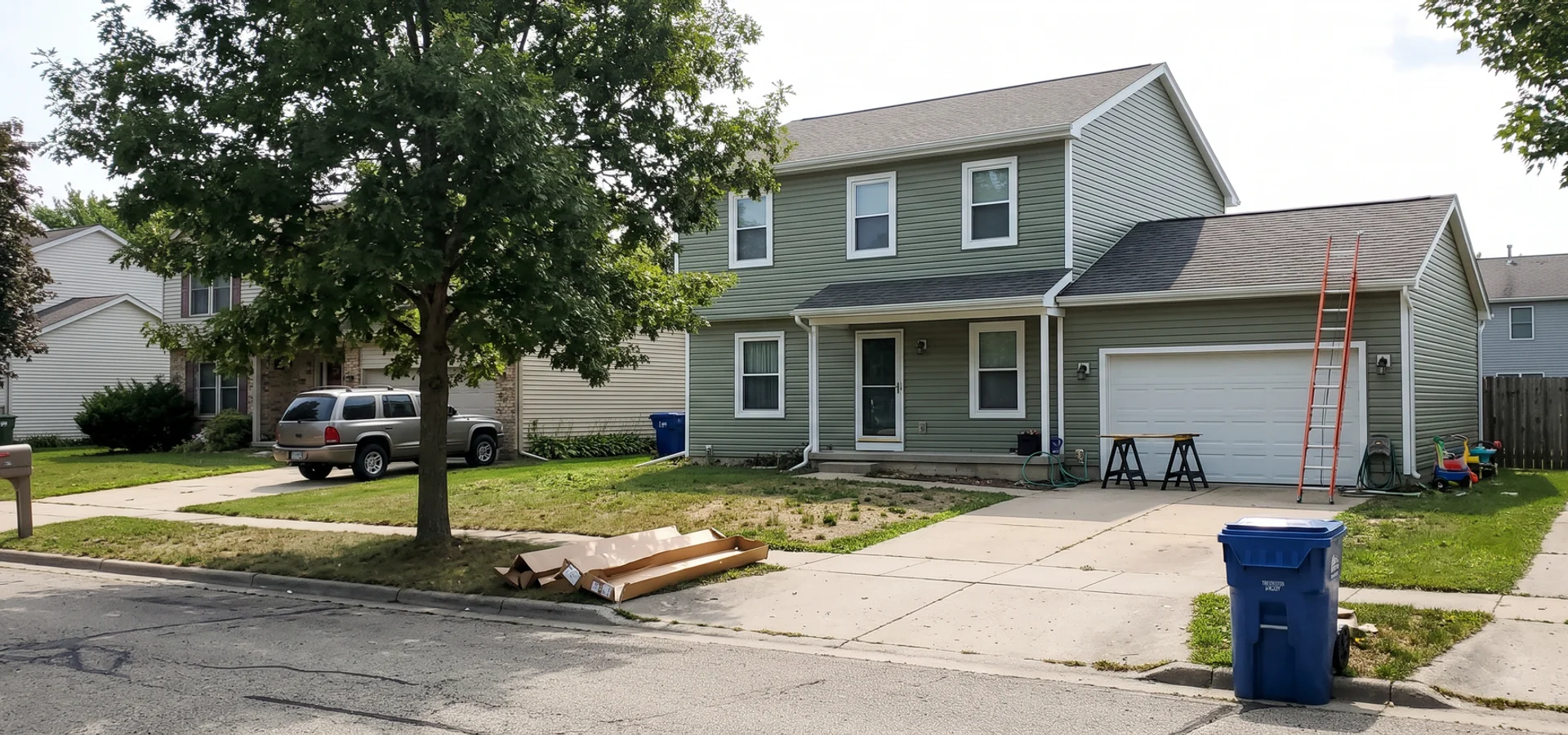
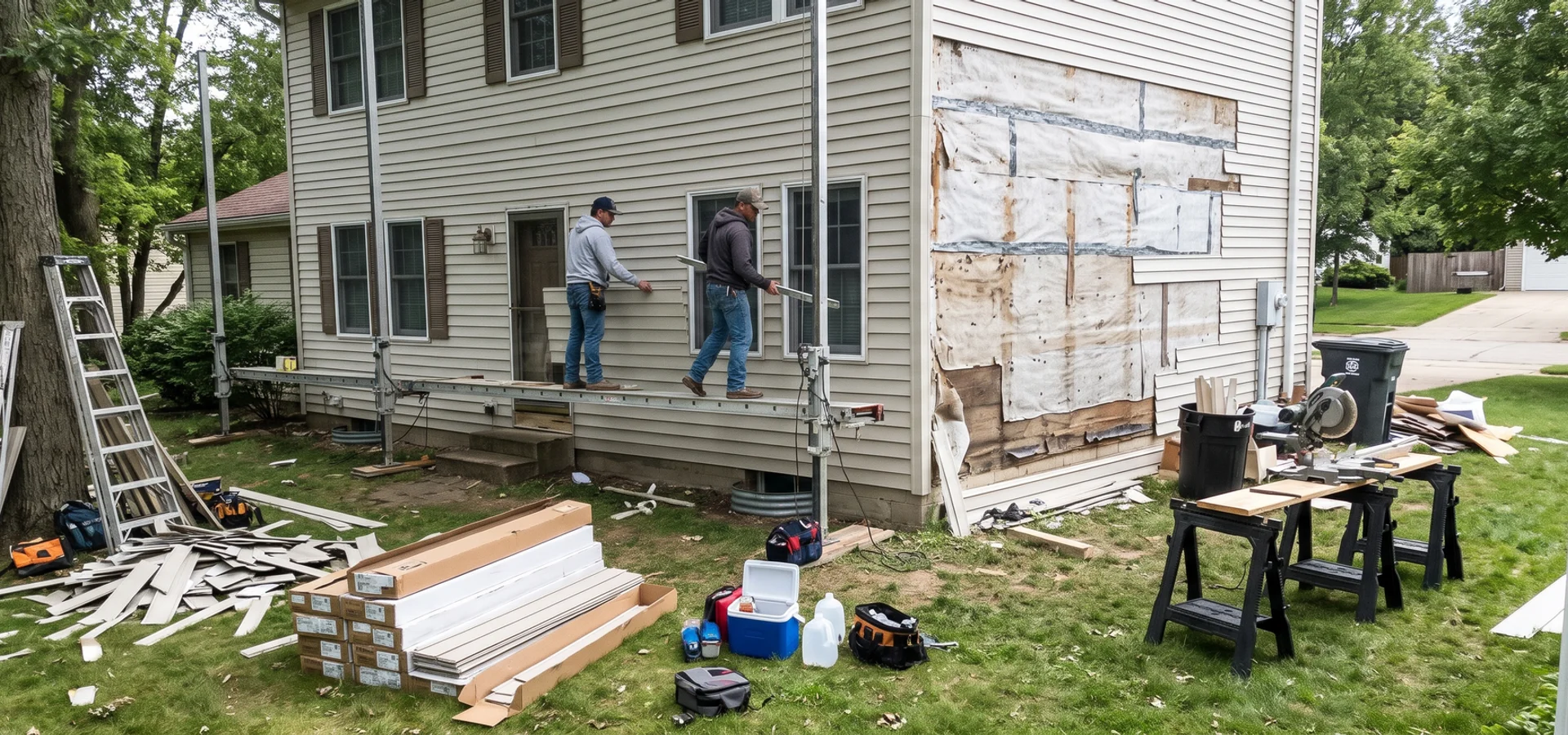
Wondering what siding replacement in Grand Rapids really involves? As siding contractors in Grand Rapids, we take every wall of your house down to the sheathing and put new siding on all of it. When the siding is past fixing, we replace it in vinyl, fiber cement or wood.
The old siding comes off first so we can see what’s underneath. Here’s the order we follow:
- Strip the old siding down to the sheathing.
- Fix any rot we find.
- Put on fresh house wrap and flashing.
- Hang the new siding.
Local houses are a big reason we work this way. According to NeighborhoodScout, about 37% of Grand Rapids homes were built before 1939, and another 31% went up between 1940 and 1969. Plenty of those houses still wear their second or third layer of siding.
Putting new siding over all of that hides problems and makes it sit wavy. That’s why every replacement job we do starts with a full tear-off. Nothing goes on over old siding.
When Is It Time to Replace Instead of Repair?
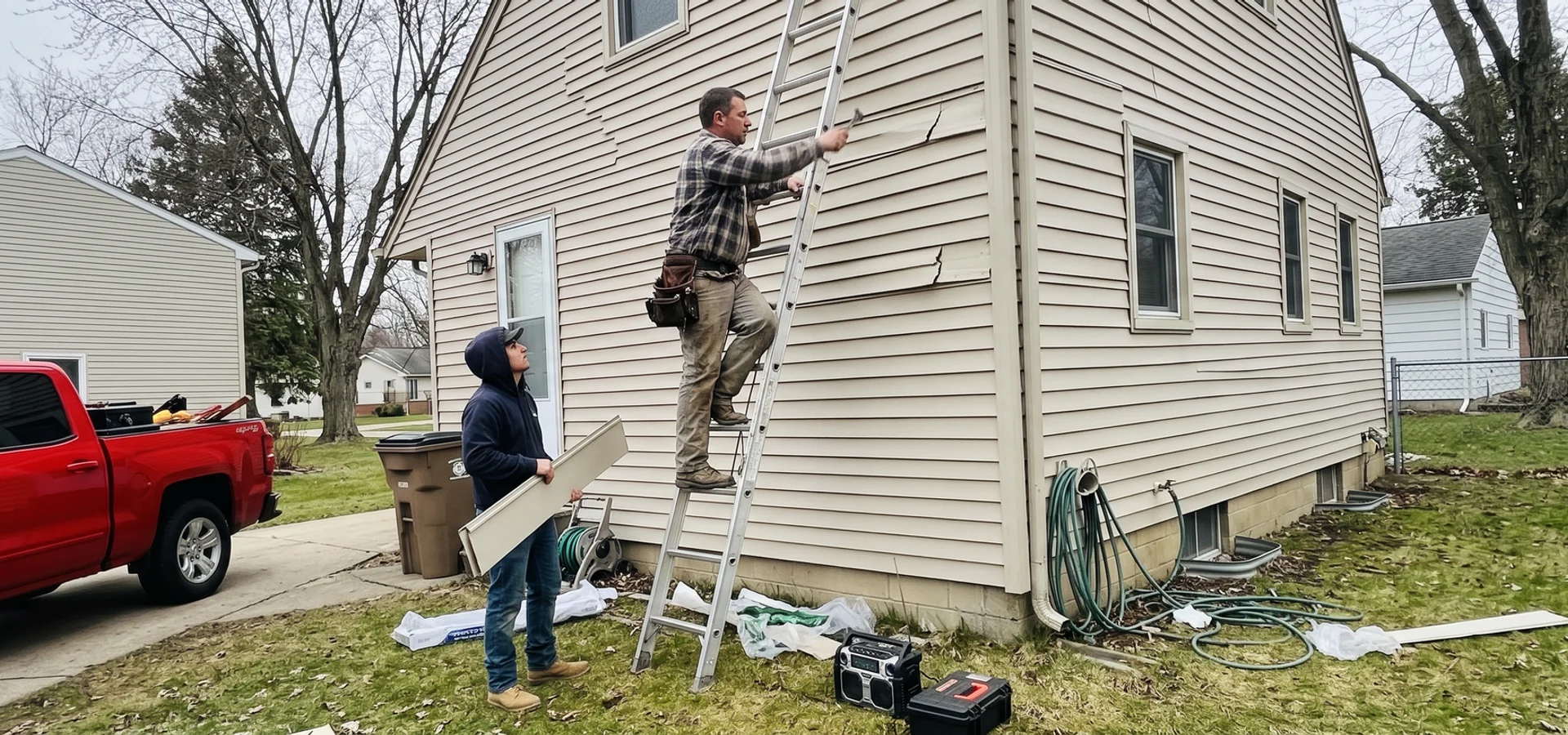
We’d rather fix a few panels than sell you a whole house of siding, and we’ll tell you straight when a repair is enough. Plenty of damage that people assume means new siding is work our siding repair crew can handle. But some houses really are done:
- Cracks, warping or rot on most walls, not just one corner
- Siding so faded or discontinued that patches stand out from the street
- Water getting into the walls from failed house wrap or missing flashing
- More than one layer of old siding that needs to come off anyway
Water is the sneaky one. The Building America Solution Center, run by Pacific Northwest National Laboratory, points out that older wood siding shows water trouble through peeling paint. Newer vinyl and fiber cement can hide the same problem for years.
So siding that looks fine from the street can still be hiding trouble. If you’re on the fence, our guide on siding repair vs. replacement walks through how we make that call.
What Goes On Behind the New Siding?
The siding you see is only the outer layer. What keeps water out of your walls is the stuff behind it, and that’s where we spend a lot of our time.
Once the old siding is off, here’s what we check and install:
- OSB sheathing: We check it for soft spots and rot.
- Weather-resistive barrier: This is the house wrap. It goes over the whole wall, with seams sealed using housewrap tape.
- Window and door flashing: Every opening gets flashed.
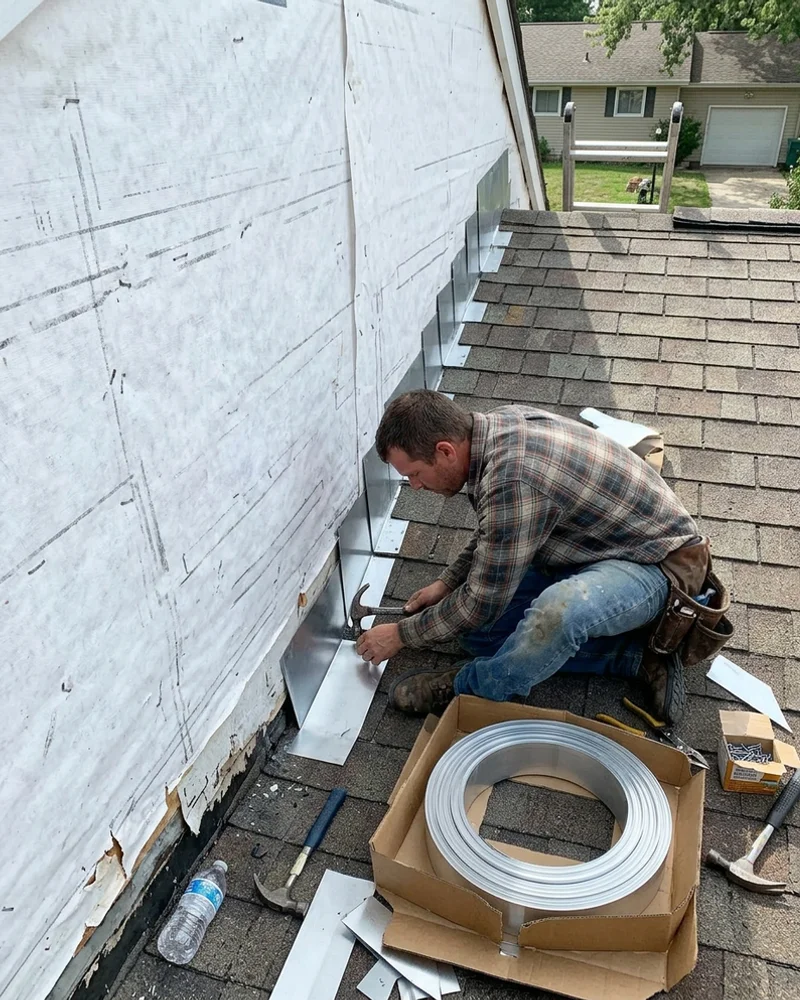
- Kick-out flashing: Where a roof meets a sidewall, it sends water into the gutter instead of down behind the siding.
- Z-flashing: It goes where siding meets other materials.
- Drip edge: It goes where water needs to shed.
Kick-out flashing is small, but it matters. The Pacific Northwest National Laboratory’s guidance says it’s what diverts water away from the spot where a sloped roof eave meets a vertical sidewall. Without it, that water can soak the wall for years before anyone notices.
The new siding then starts with a level starter strip at the bottom, with corner posts and J-channel around windows and doors. We use corrosion-resistant fasteners and hang vinyl loose enough to move, because Michigan’s freeze-thaw cycles push and pull siding all year.
That loose fit isn’t a shortcut. The Vinyl Siding Institute’s installation manual says vinyl can expand and contract 1/2 inch or more over a 12-foot-6-inch length. It also calls for about 1/32 inch of clearance under each fastener head, and warns that nailing too tight makes siding buckle.
Which Material Is Right for Your House?
We replace siding in three materials, and each has its place on West Michigan houses:
- Vinyl siding costs the least, needs the least upkeep and comes in a lot of colors and profiles.
- Fiber cement siding gives you the look of painted wood lap siding on a board that doesn’t rot.
- Wood and cedar siding is real wood, with real warmth and real upkeep.
For a side-by-side look at upkeep, durability and cost tier, read our vinyl vs. fiber cement vs. wood siding guide.
Every material we install carries a manufacturer warranty, and we go over yours in writing at the estimate. Warranty terms vary a lot by brand, so read them closely. James Hardie, for example, backs its fiber cement with a 30-year non-prorated warranty. Its ColorPlus factory finishes get a separate 15-year limited warranty covering paint and labor.
What Does the Price Include?
Your estimate lists everything below, with a straight price range:
- Tear-off and disposal
- House wrap and flashing
- Siding and trim
- Cleanup
If we find damage under the old siding that we couldn’t see at the estimate, we stop and show you before fixing it. That way the number you agreed to doesn’t change without you knowing why.
For a rough market snapshot, HomeYou’s 2026 data from 42 completed Grand Rapids projects puts typical siding replacement at $7,355 to $10,630. Individual jobs ranged from $2,443 to $15,640. Think of that as context, not a quote, since house size, material and hidden repairs all move the number.
For more budget context before you call, see our guide on siding replacement cost in Michigan. When you’re ready for a real number on your house, reach out and we’ll set up your estimate.