What Are Soffit and Fascia, and Why Do They Fail?
Ever look up at your roof edge and wonder what those boards and panels actually do? If you’re searching for soffit and fascia repair in Grand Rapids, it helps to know the basics first.
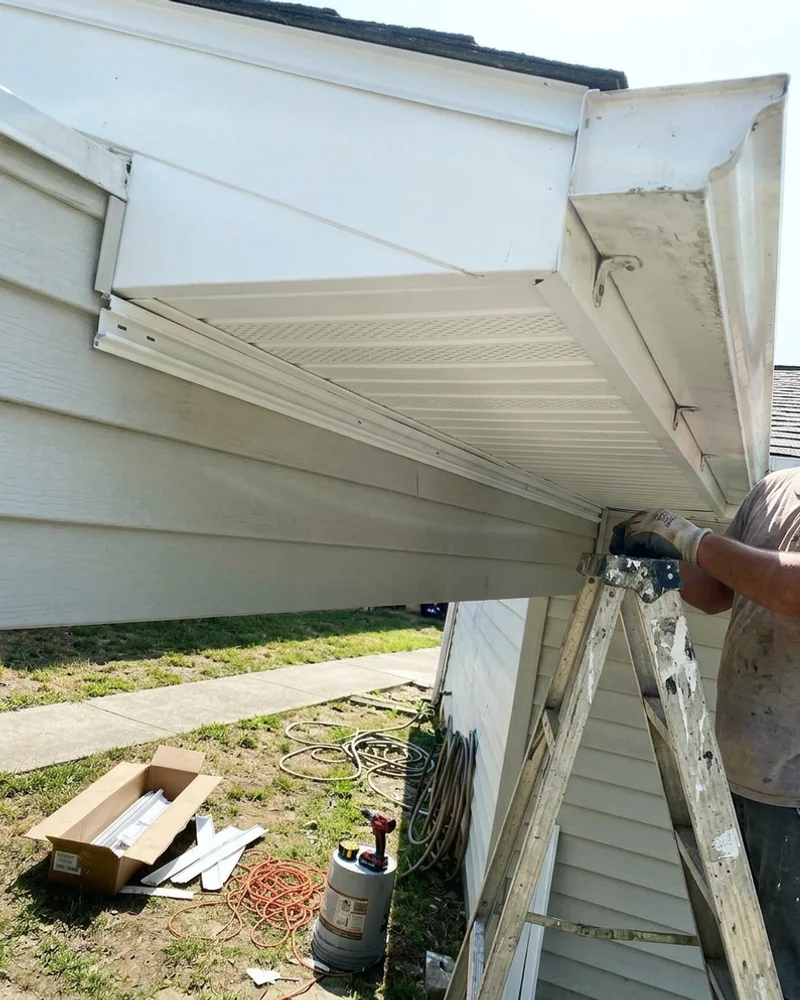
The fascia is the board along your roof edge where the gutters hang. The soffit is the panel underneath the overhang, between the fascia and the wall. Together they:
- Close off the eaves
- Hold the gutters
- Let air into the attic
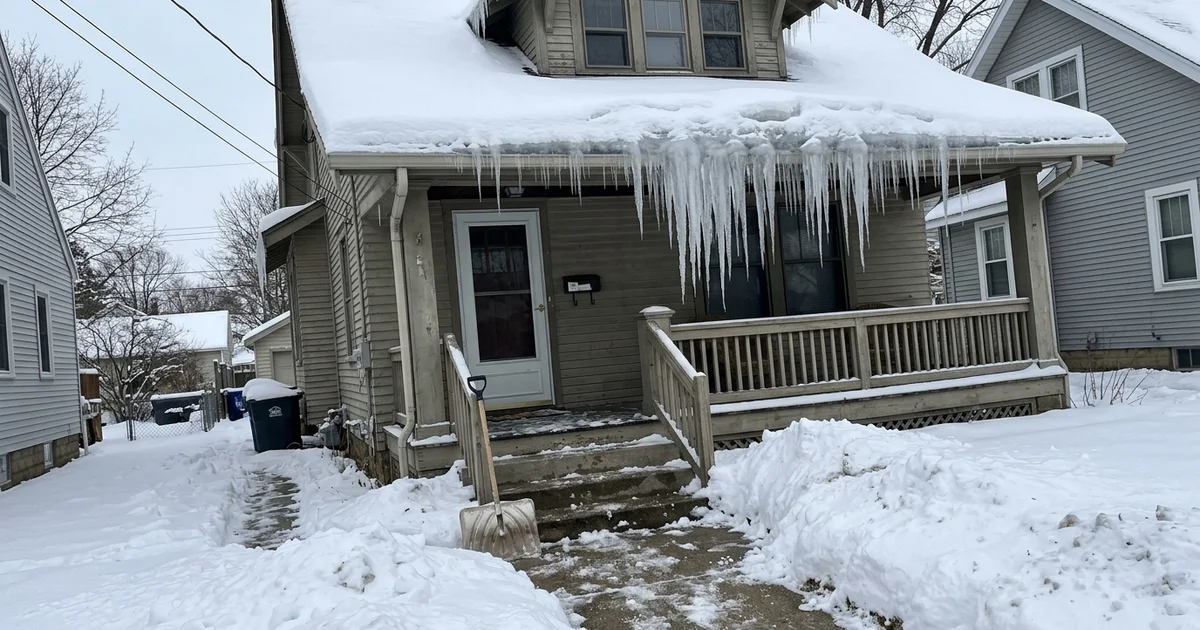
They take a beating from gutters, ice dams and critters. According to Gunner Roofing, the weight of an ice dam routinely tears gutters right off the fascia.
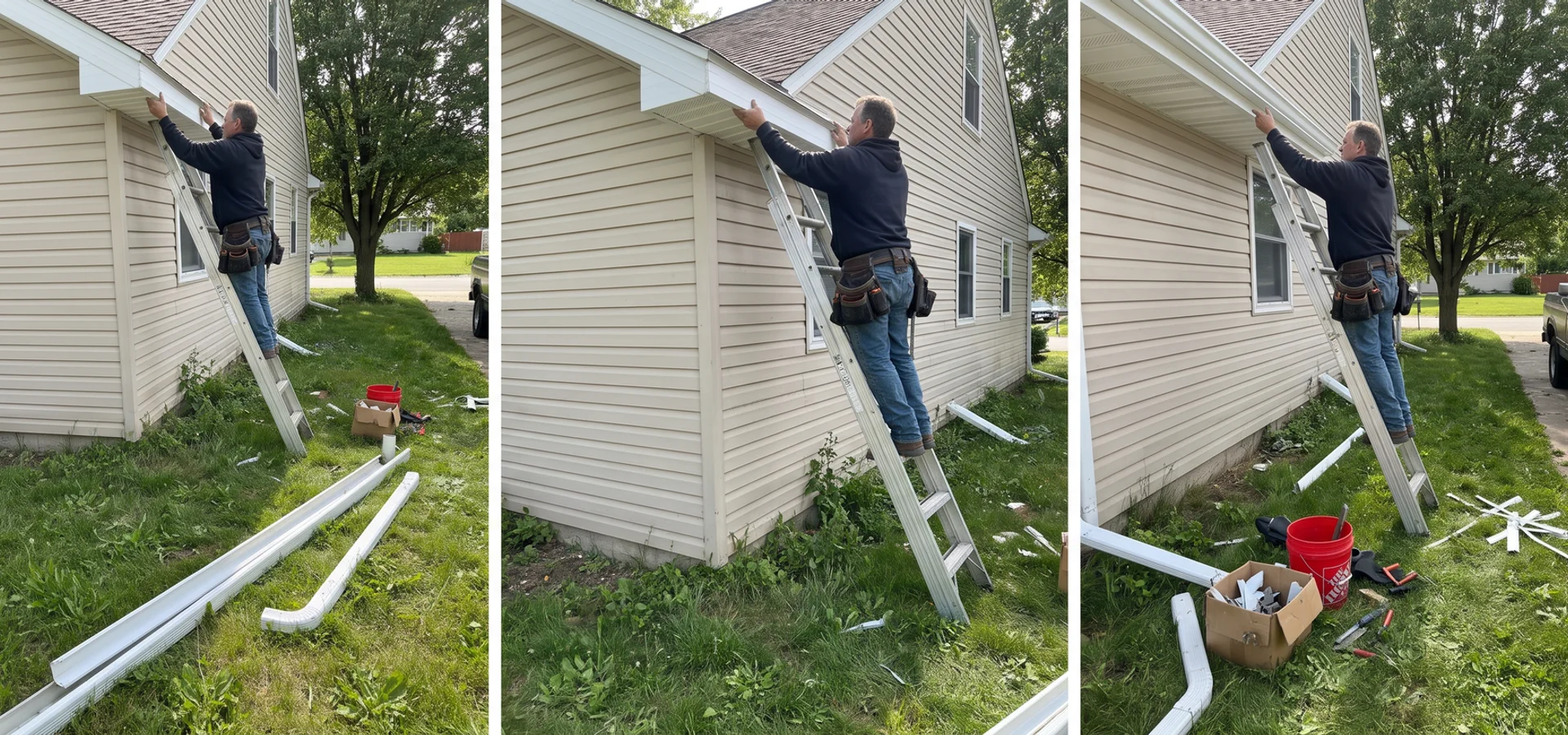
As a Grand Rapids siding contractor, we repair or replace these parts on their own or as part of new siding. That means rotted sub-fascia replaced, fascia wrapped in aluminum where it makes sense, and soffit panels chosen so your attic keeps getting the air it needs.
How Do Michigan Winters Damage the Eaves?
Lake-effect snow sits on Grand Rapids roofs for weeks. Brace Homes puts local snowfall at roughly 64 to 72 inches a year, well above the national average of about 28 inches.
When heat from the house melts the bottom of that snow, the water runs down to the cold roof edge and refreezes into ice dams. Water backs up behind the ice and soaks:
- The fascia
- The drip edge area
- The soffit below it
Overflowing gutters do the same thing in spring and fall.
Over a few seasons, that water rots the fascia and sub-fascia, sometimes down into the rafter tails. Our guide on ice dams and soffit and fascia damage explains it in more detail, including when you need a roofer too.
Here’s a pro tip. The Minnesota Department of Commerce says the primary cause of ice dams is warm, moist air leaking into the attic. New trim won’t fix that by itself, so sealing leaks and keeping the soffit vents clear matters just as much as the repair.
What Soffit Options Do You Install?
We install three main types of soffit:
- Vented vinyl soffit, with small perforations that let air into the attic
- Solid soffit, for areas that don’t need venting, like porch ceilings
- Hidden-vent soffit, which looks solid from below but has venting built into the panel
Soffit panels sit in F-channel along the wall and tuck under the fascia. Venting matters here. Your attic needs attic intake ventilation at the eaves to pull fresh air in, and the panel’s net free vent area (NFVA) decides how much air gets through.
The International Residential Code sets the baseline at 1 square foot of vent area for every 150 square feet of attic floor. It allows 1/300 in certain setups. A materials guide from Super Arbor runs the math for a 1,500 square foot attic at 1/300: that’s 5 square feet of vent area, or about 360 square inches of intake at the soffit.
Panel choice changes the result a lot:
| Panel type | Typical airflow |
|---|---|
| Fully vented vinyl | About 7 to 10 sq in per sq ft |
| Center-vented vinyl | Roughly one third of fully vented |
| Solid | None |
We pick panels and layout so the attic keeps breathing. Benjamin Obdyke, a ventilation manufacturer, advises that intake should match or beat the exhaust, never the other way around. We also make sure insulation isn’t blocking the vents from inside where we can see it, and baffles help keep blown-in insulation off the intake openings.
Aluminum Fascia Wrap
For fascia, we often use an aluminum fascia wrap. It’s coil stock bent on a siding brake into brake-bent trim that fits your fascia exactly. It never needs paint.
But we only wrap solid wood. Wrapping rotted fascia traps moisture and the rot keeps spreading, so soft boards get replaced first. One fascia replacement guide from Roof Gutter Now calls wrap a finish and weather layer, not a structural fix. Gutters fastened to weak boards won’t hold either.
Animals, Birds and Pest Exclusion
A gap in the soffit is an open door for squirrels, bats and birds. According to 800-Kil-Bugs, squirrels will gnaw through soffits, fascia boards and vents to get in.
Part of every job is pest exclusion: closing up entry holes and gaps with solid material so they can’t chew their way back in.
Bats need extra care. They’re protected under local and national wildlife laws, so sealing a hole with bats still inside is a mistake. If you hear scratching or find droppings near the eaves, tell us before anyone patches anything.
Soffit and Fascia With New Siding
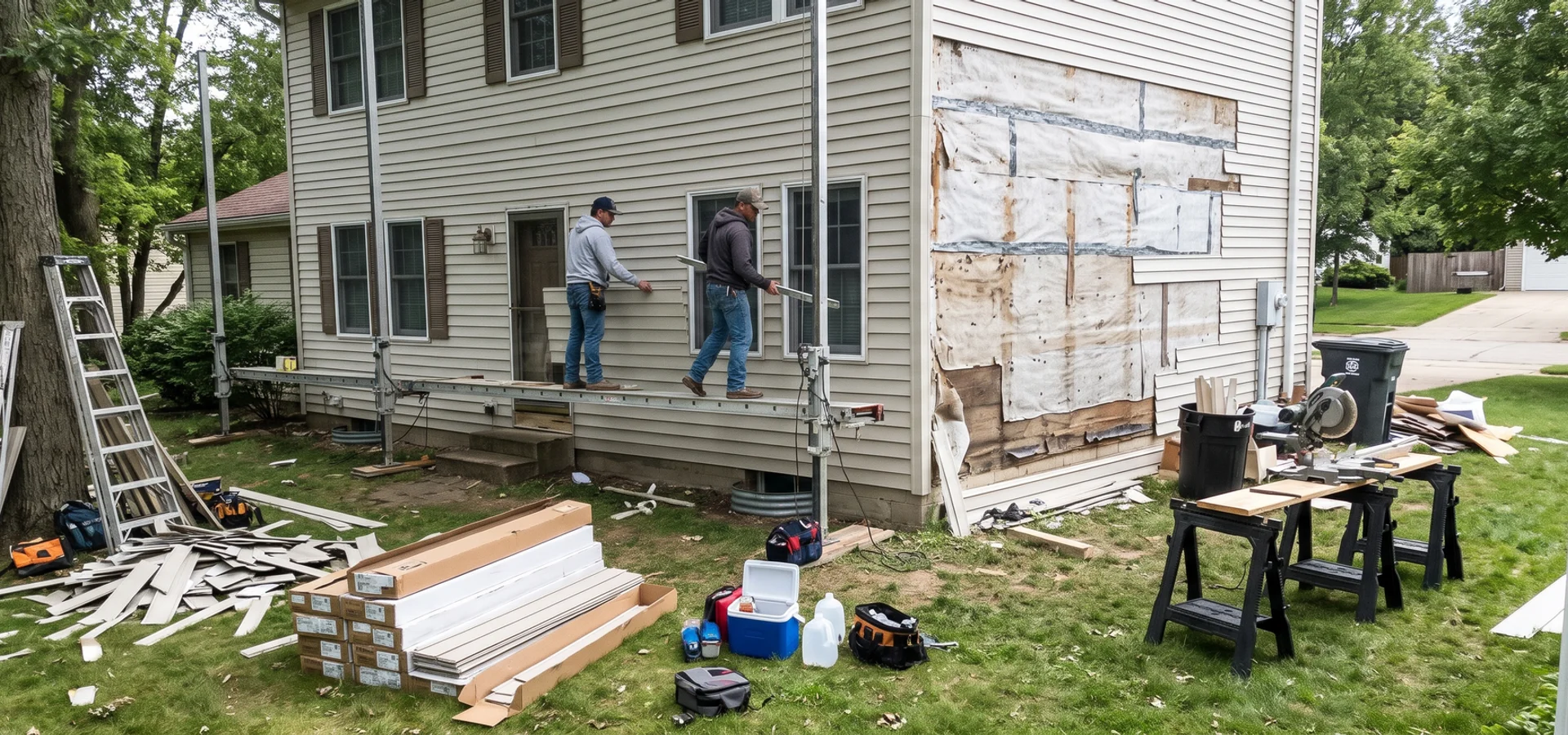
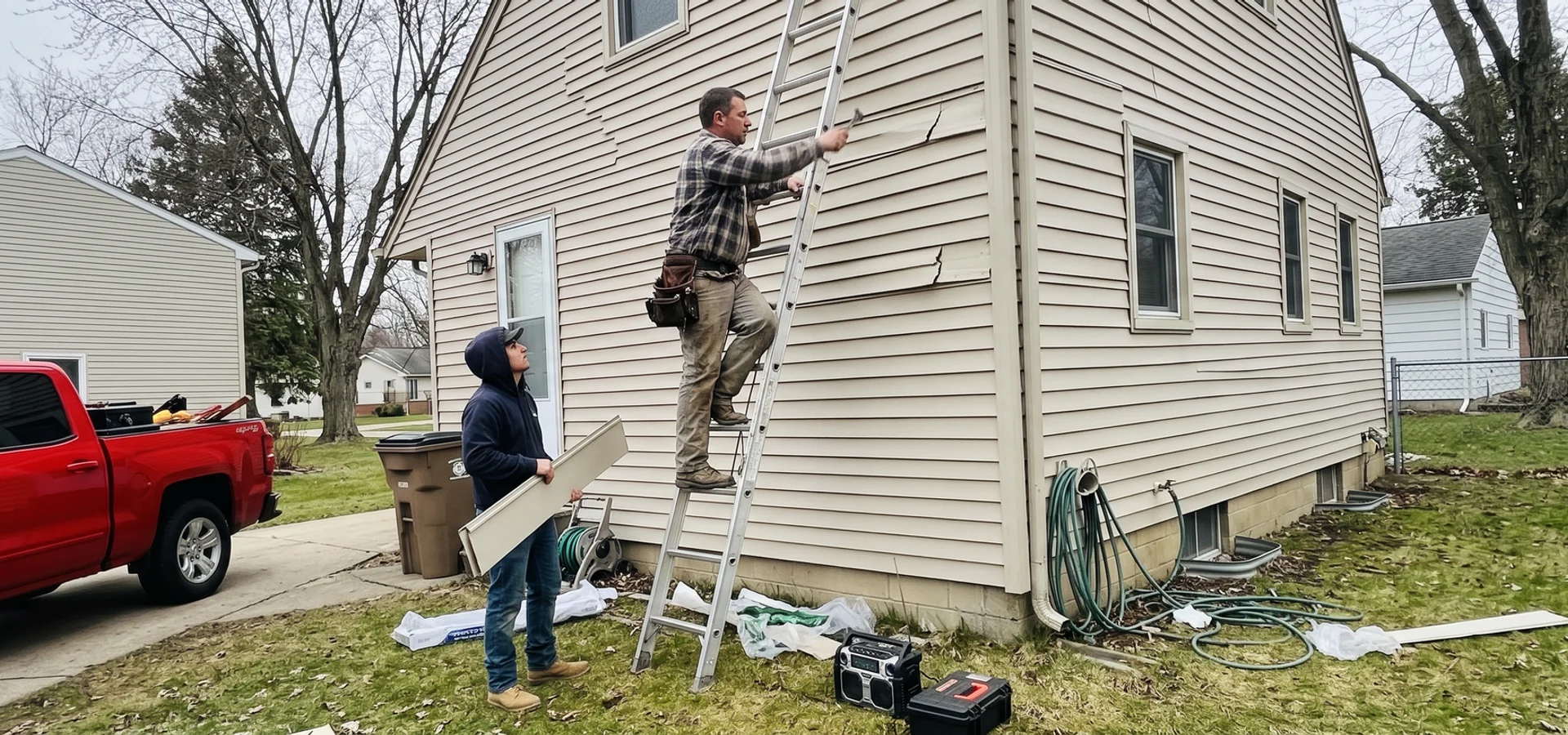
Doing soffit and fascia with a siding replacement ties the whole exterior together. Colors match, trim lines up, and it’s one crew and one cleanup. If storm wind tore off trim along with siding, see our storm damage siding repair service.
Spotted sagging gutters, peeling trim or a gap where critters could slip in? Reach out for soffit and fascia repair in Grand Rapids, and we’ll check the eaves and tell you what needs fixing now and what can wait.