What You’re Really Paying For in a Siding Repair
Siding repair cost in Michigan rarely comes down to the panel itself. Material, height, matching and what’s hiding behind the damage set the number.
That’s why the same “three cracked panels” can price very differently on two Michigan houses.
National guides back this up. Angi’s 2026 repair guide and This Old House’s 2026 guide both put vinyl at the affordable end of the range. Brick sits at the top, and wood falls in between depending on the species.
Below, we walk through the six cost drivers, show how they stack up, explain why small jobs have a minimum, and cover when replacement becomes the better spend. When you want your actual price, our siding repair crew gives a straight price range at a free estimate.
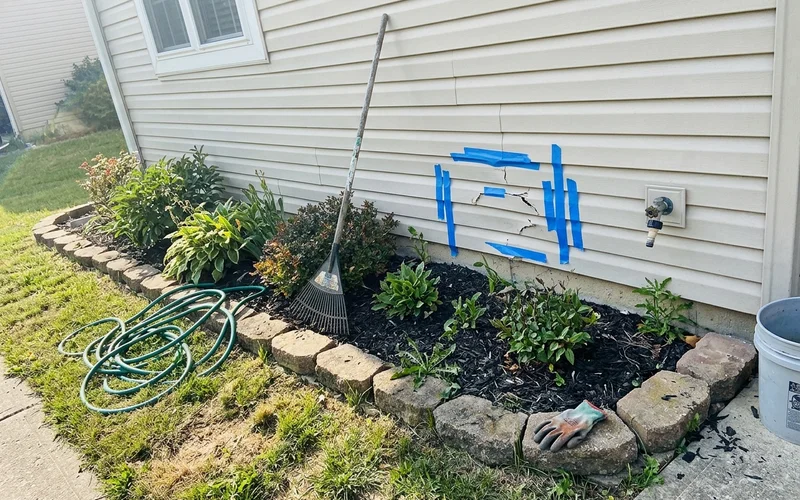
We don’t put dollar figures on the web. A price without seeing your wall is a guess, and guesses either scare people off or turn into surprises later. Here’s what goes into the real number instead.
What you can count on
A written price range after we’ve seen the damage. If we find more once the wall is open, you hear about it before we fix it.
The Cost Drivers
Six things set your price: material, how many pieces are damaged, height and access, matching, damage behind the siding, and finish work. Here’s how each one plays out on a real Michigan house.
- Material. Vinyl panels release from the course above and swap out fairly quickly. That’s why vinyl siding repair cost usually lands lowest. Fiber cement planks have to be cut carefully, fastened, caulked and painted. According to Wikipedia’s fiber cement overview, end joints need a gap of roughly 5 millimeters filled with caulk made for the product, and thin boards chip if handled roughly. Wood boards need matching, back-priming and stain or paint. Angi’s 2026 wood siding guide notes that species matters, with pine costing less than cedar or redwood, so cedar board repair cost climbs with every finishing step.
- How many pieces are damaged. A single cracked panel and a whole torn-off section are different jobs. We count what actually needs replacing, not the whole wall. That count also shapes the cost to replace siding panels on your house.
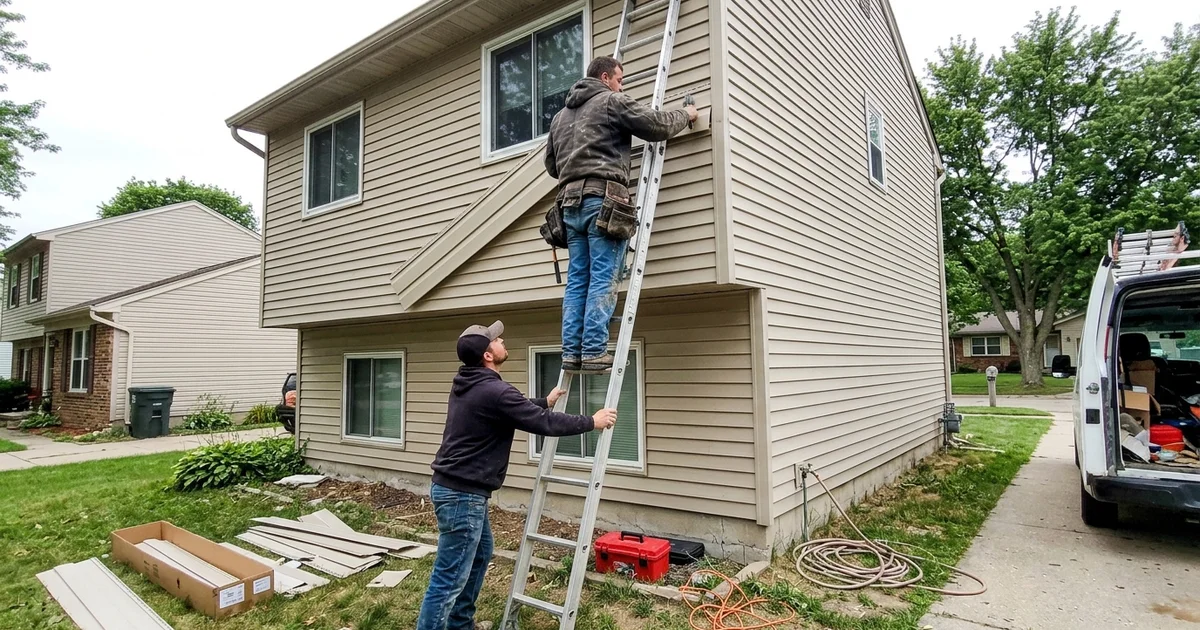
- Height and access. A panel by the back door can be done off a stepladder. A gable peak on a two-story house needs tall ladders or staging. Decks, steep yards and landscaping right against the house also slow things down.
- Matching. Finding the closest color and profile to your existing siding is often the hardest part. Common colors are easy. Lone Wolf Exteriors points out that UV light is the main cause of fading, and south-facing walls usually shift the most. Faded, older or discontinued siding can take sourcing time, and on wood homes, unusual profiles may need to be found or milled.
- Damage behind the siding. House wrap is the water-resistant layer that keeps rain and snow out of the wall while letting vapor escape. If it’s torn, or the sheathing behind the damage is wet or soft, that gets fixed before the new siding goes on. The roofing and siding site My Exterior Pro says lumpy vinyl or a spongy wall that gives under light pressure often means the wood underneath has absorbed water. You can read about the warning signs in signs of water damage behind siding.
- Finish work. Caulk, primer, paint or stain blend the repair into the wall. Skip this step and a patch stands out from the street.
A Michigan-specific wrinkle: winter changes the job. NEXT Exteriors, a Michigan contractor, notes that vinyl turns brittle below 0°F. Removing a panel in a deep freeze takes extra care, and that care takes time.
How the Drivers Stack Up
The cheapest repair is one or two common-color vinyl panels on the ground floor with dry sheathing behind them. The most expensive is a painted or stained material, spread over several walls, up high, with rot underneath. Most real jobs land somewhere between those two.
| Factor | Pushes cost down | Pushes cost up |
|---|---|---|
| Material | Vinyl, common color | Fiber cement or wood needing paint or stain |
| Amount | One or two panels | Whole sections or several walls |
| Height | Ground floor | Second story, gables, steep lots |
| Matching | Common, current color and profile | Faded, discontinued or custom profile |
| Behind the siding | Dry, solid wrap and sheathing | Wet or rotted sheathing |
Why Small Repairs Have a Minimum
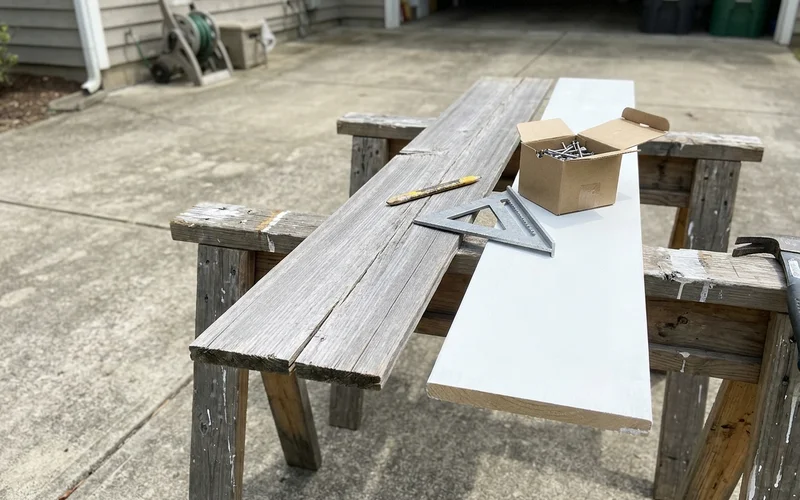
One panel isn’t priced like one panel because most of the work happens before the panel goes up. Every repair, big or small, needs the same setup:
- A truck trip to your house
- Ladders set up safely
- The right parts found and matched
- Time to do it right
Those costs are about the same for one panel or five. Angi’s Detroit cost guide adds that licensing costs in Michigan generally get passed along to clients, which is one more fixed cost baked into each visit.
So small jobs carry a minimum. The upside is that fixing several small things in the same visit is good value. If you’ve got a cracked panel in front and a loose one in back, have them done together.
When Repair Stops Being the Cheaper Choice
Repairs are almost always the smaller check. A full replacement starts to win when the problems keep coming back or spread across the house. Our guide on siding repair vs. replacement explains where that line usually falls.
Watch for these signs that you’re near it:
- You’re paying for repairs every year.
- Damage shows up on most walls.
- Panels crack when touched. NEXT Exteriors says low-grade vinyl can turn brittle after 10 to 15 Michigan winters.
- Wet sheathing turns up in more than one spot.
We’ll tell you straight if your house is near that line.
Keeping Repair Costs Down
The cheapest repair is the one you do early, in one visit, with the right parts on hand. These four habits protect your wallet most:
- Fix it early. A loose panel today is a quick re-hang. Left through a windy spring, it can pull off the courses above it.
- Bundle small repairs. Do them in one visit to share setup costs.
- Keep spare panels. If you have leftover siding from a past job, keep it in the garage. Suburban Construction notes that manufacturers discontinue colors and change profiles over time, so a spare is the best possible match.
- Keep water off the walls. Clean gutters and proper flashing protect siding and the wall behind it.
Get Your Repair Priced
The fastest way to a real siding repair cost in Michigan is to have a Grand Rapids siding contractor look at the damage. We’ll check it, look behind it if needed, and give you a straight price range in writing at no cost.
Request a free estimate and send along any photos you have.