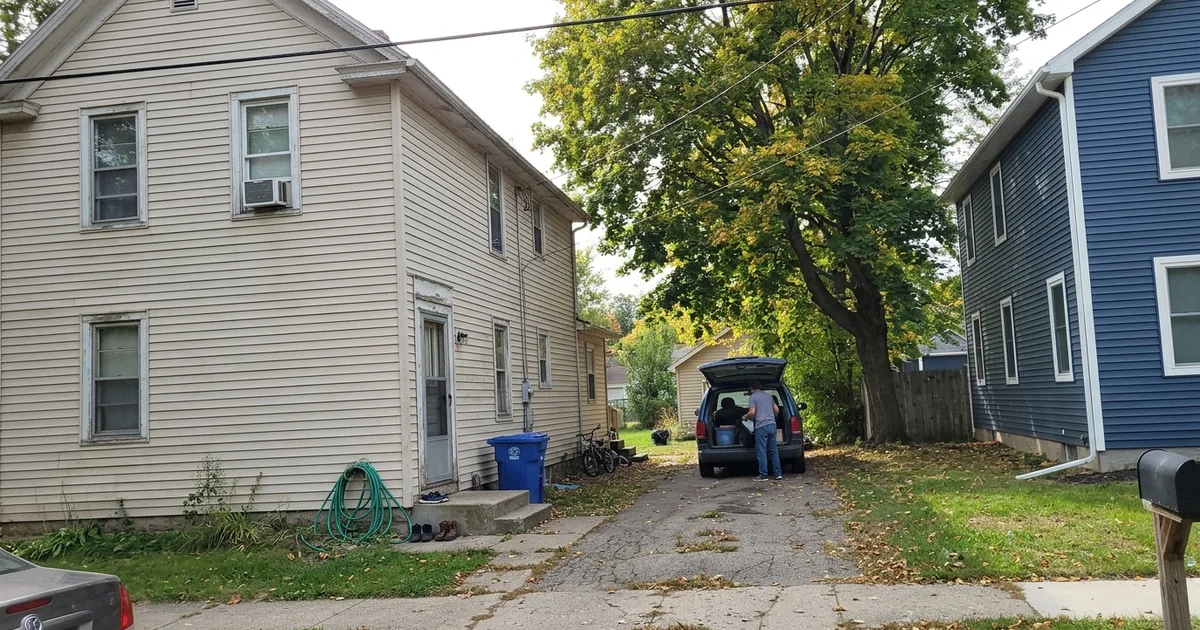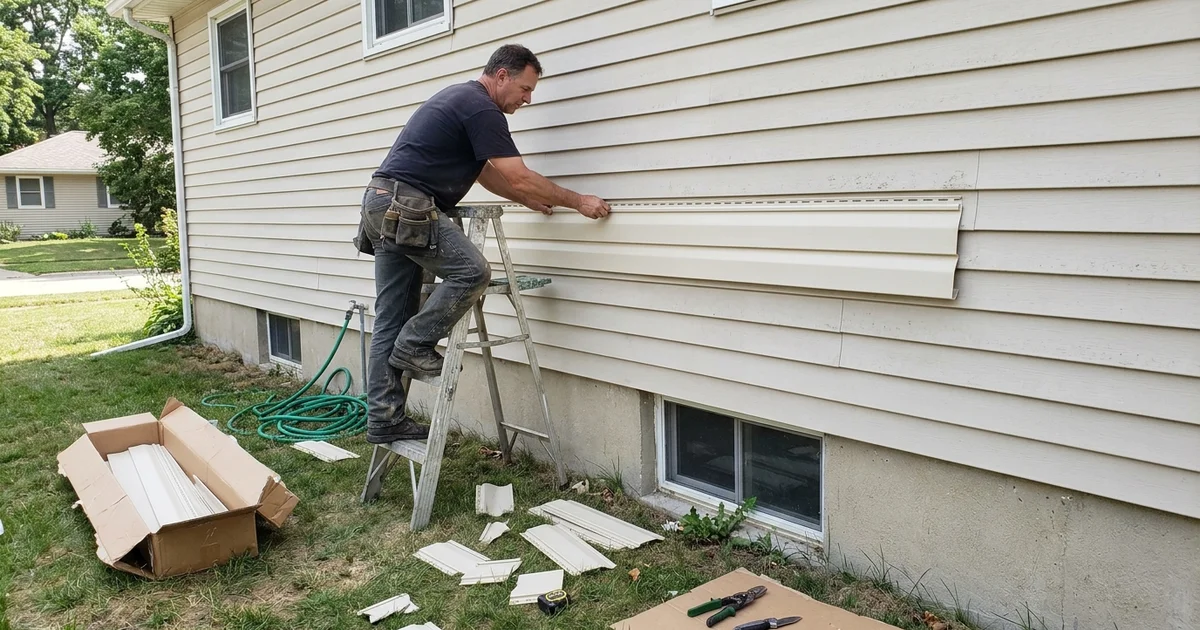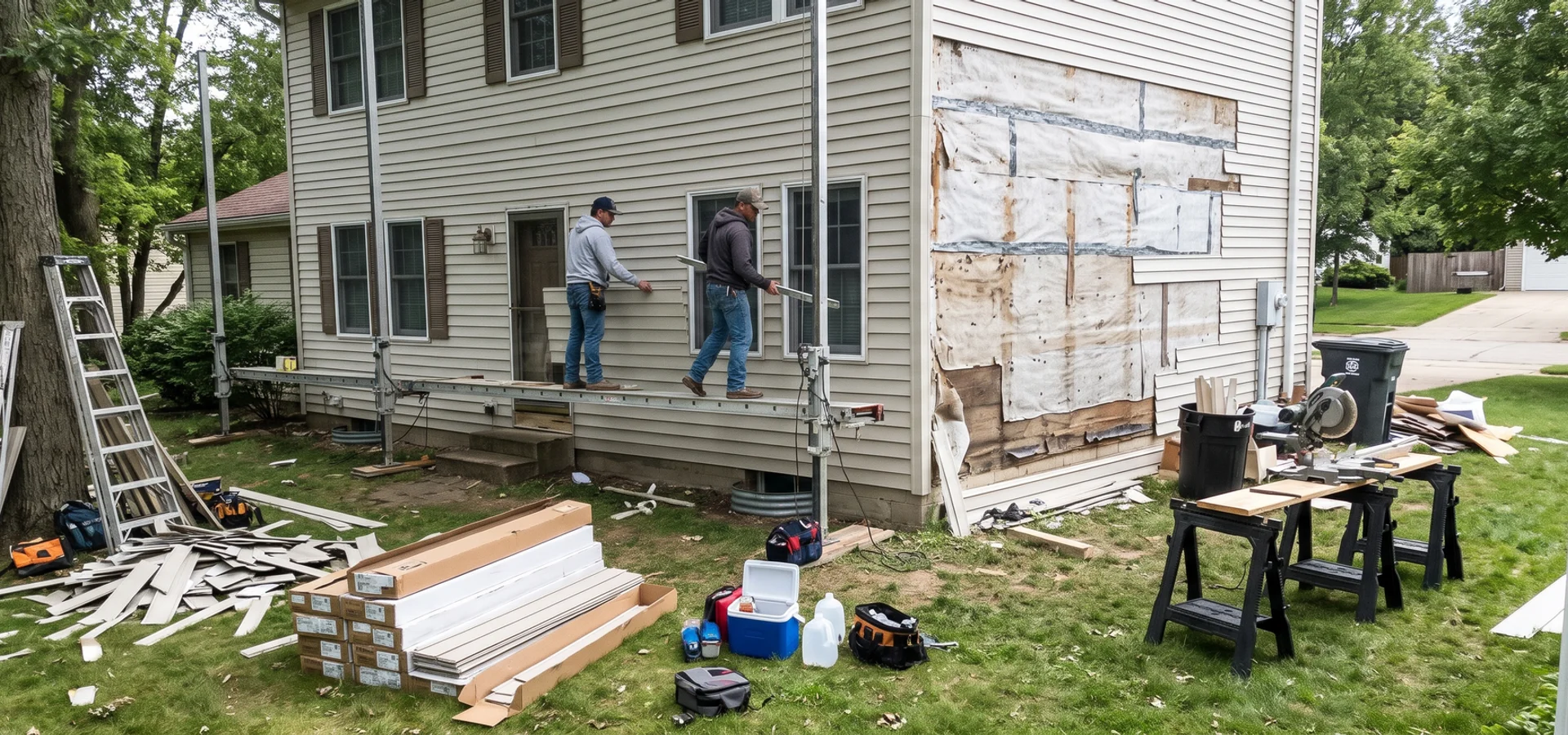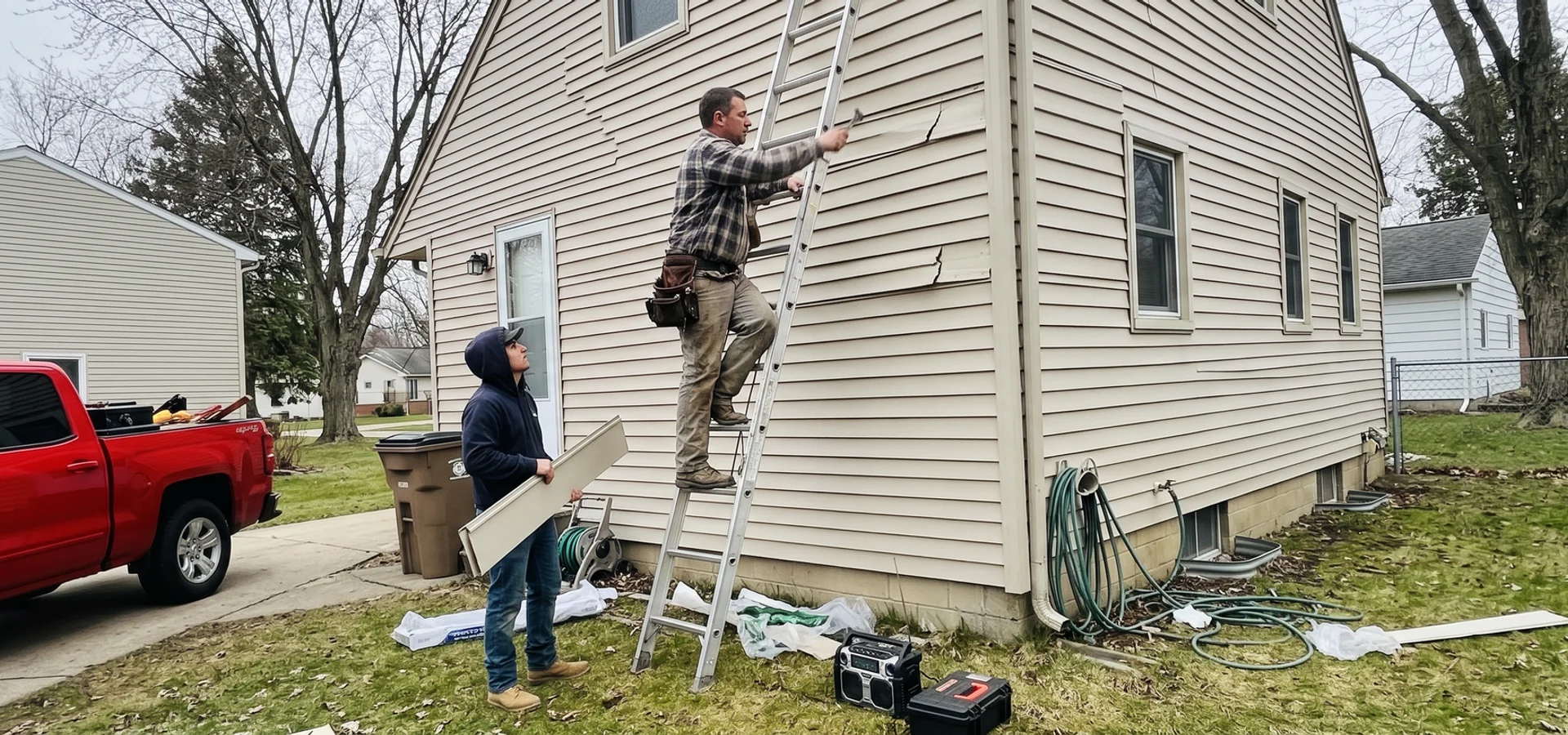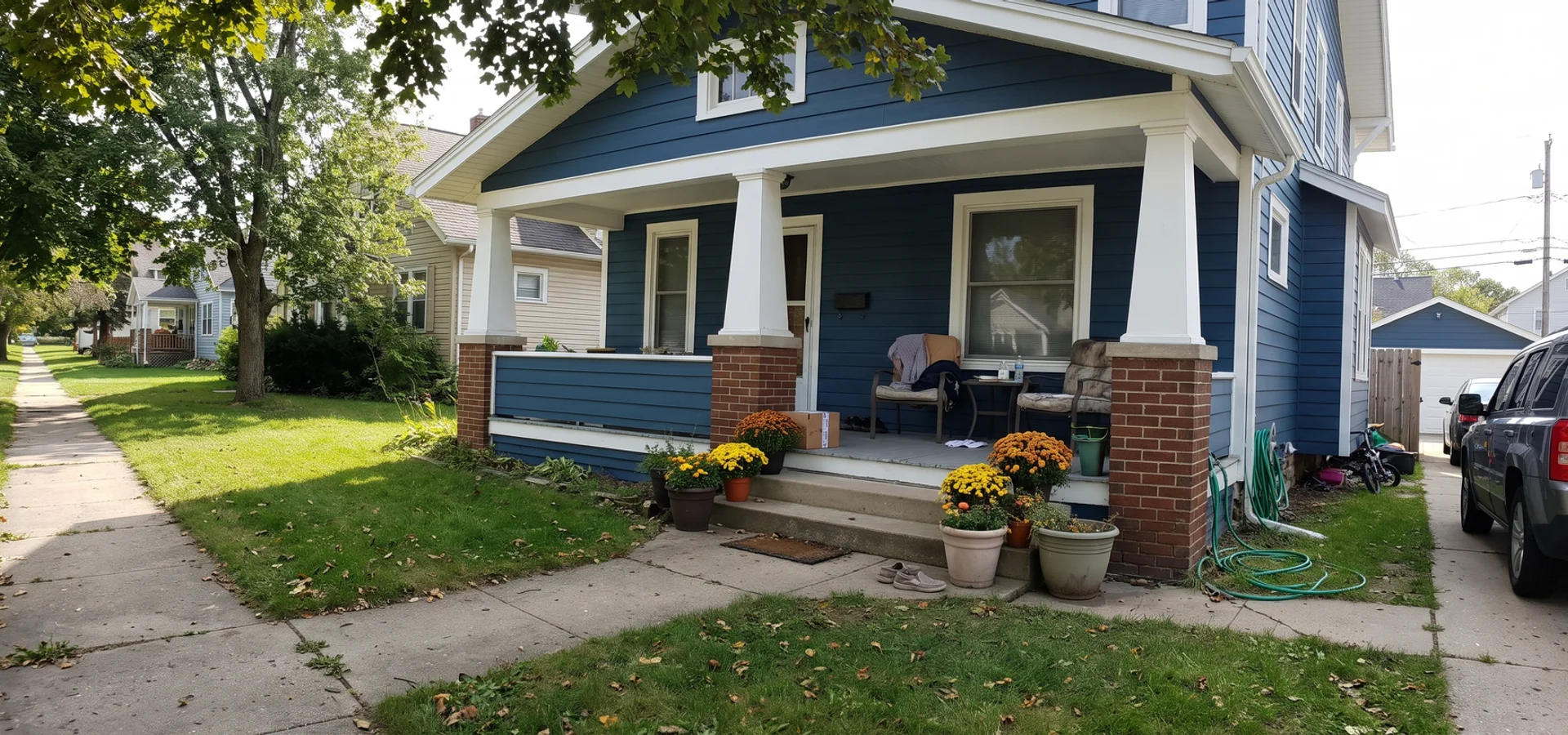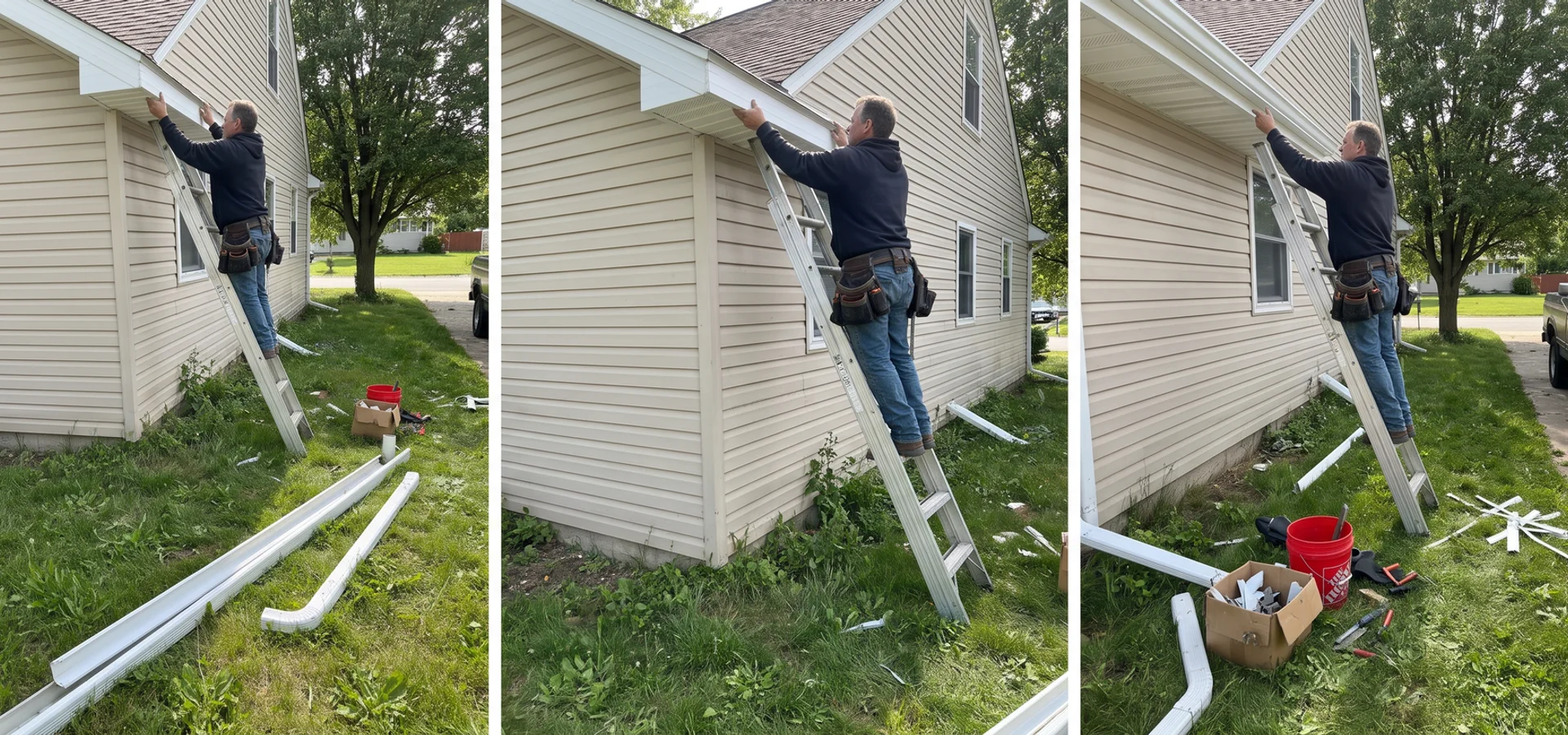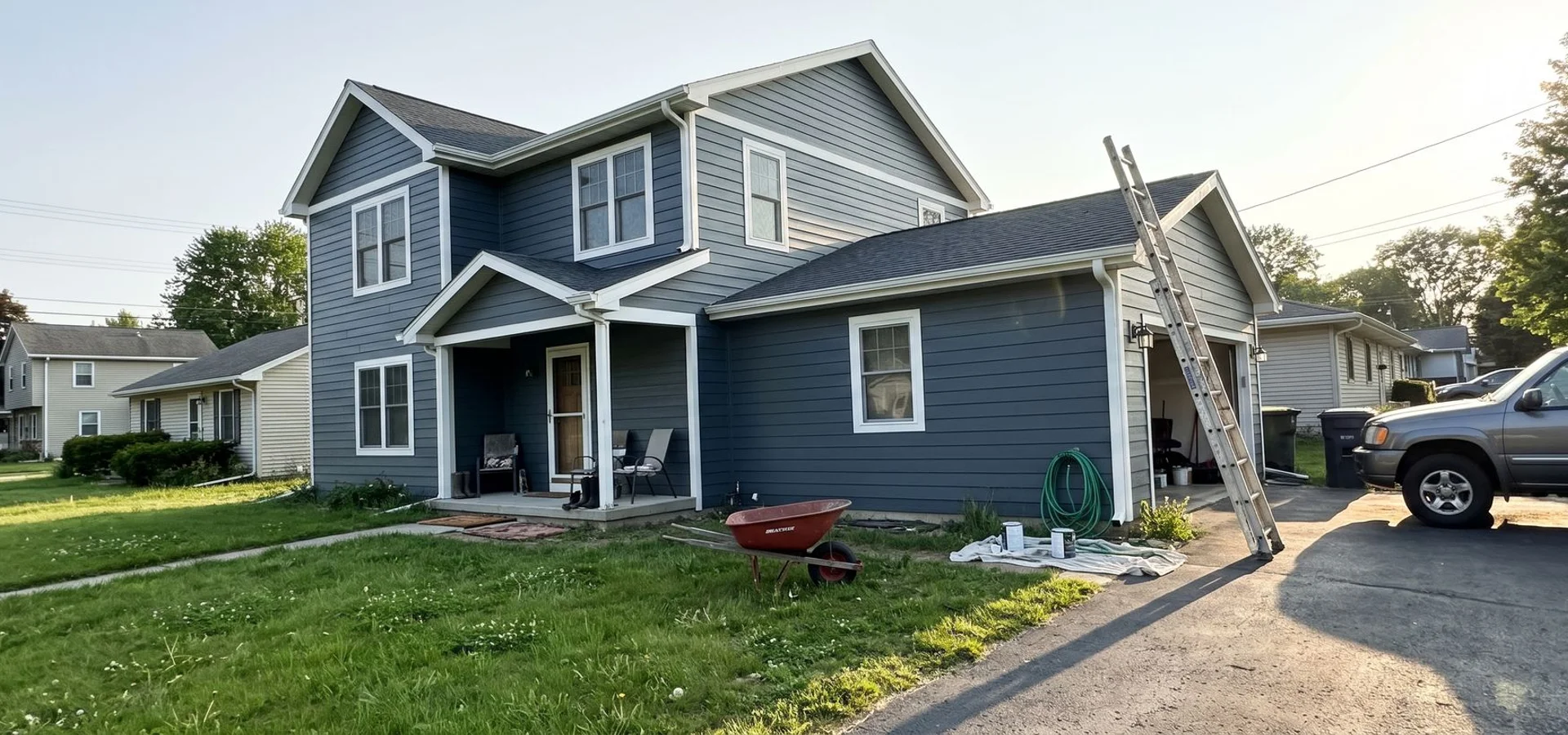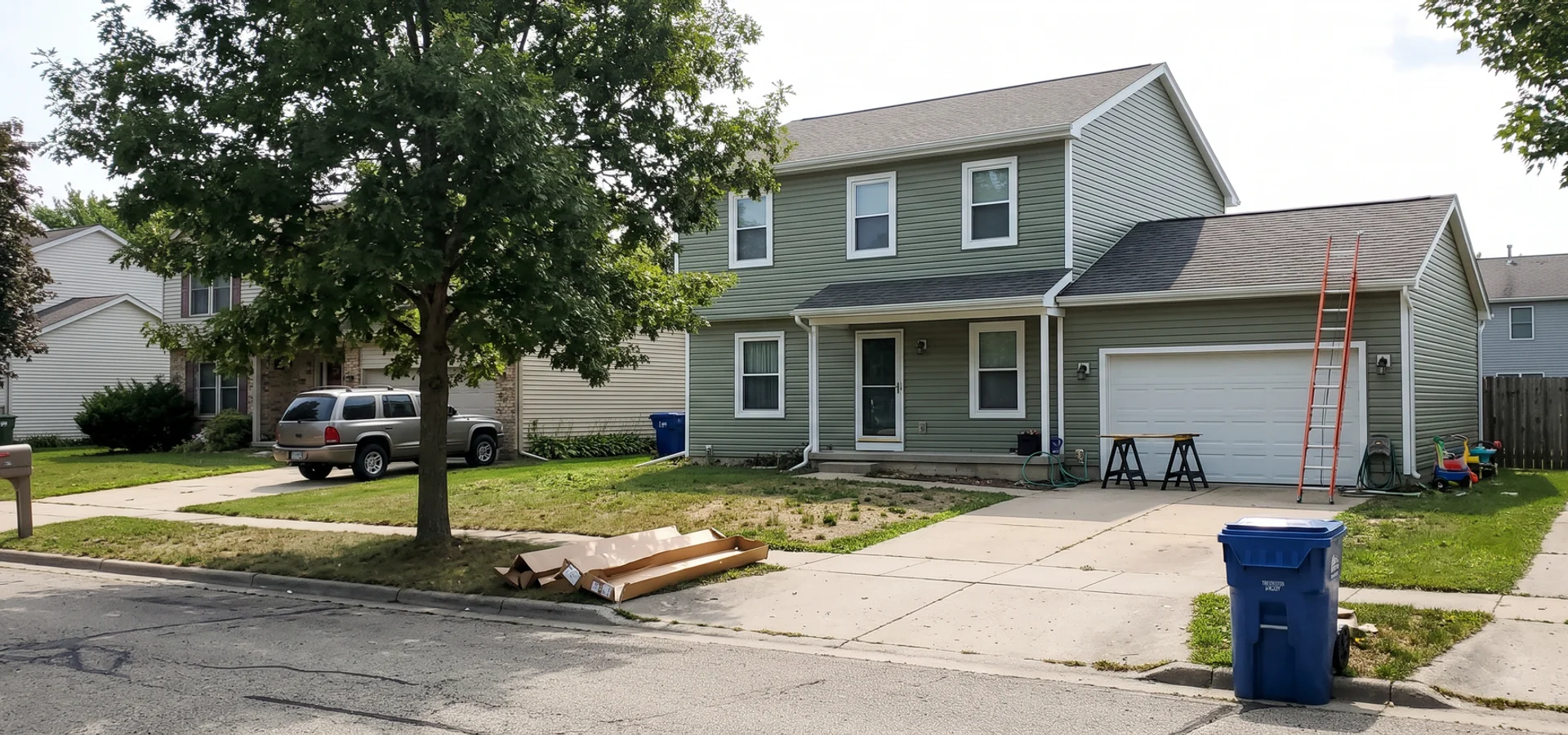
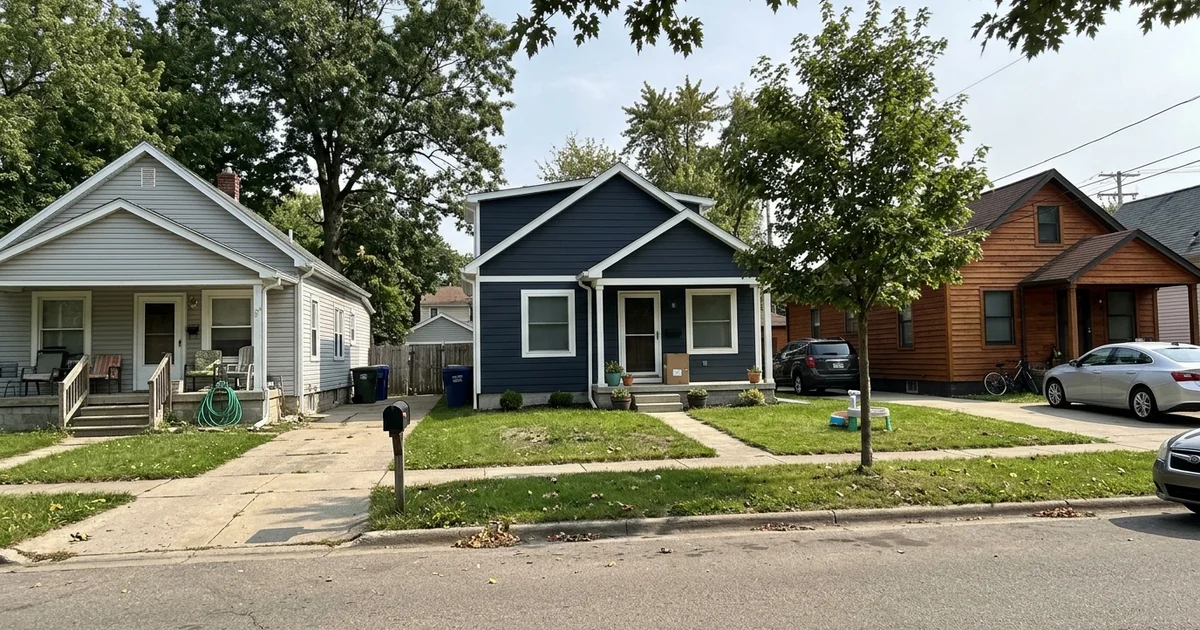
Grand Rapids two-story house with new Dutch lap vinyl siding and white trim
03 / Grand Rapids, MI

Vinyl Siding Installed and Repaired in Grand Rapids

Vinyl siding put on new, and vinyl repairs where we look for the closest color and profile to what's already on your house.

  • 20+ Years On Grand Rapids siding
  • Free Estimates No pressure to sign
  • Straight Price Ranges Written, not over the phone
  • Tear-Off First No new siding over old

What Kind of Vinyl Siding Work Do You Do?

Thinking about vinyl siding in Grand Rapids? Good call. It’s the most common siding on houses around here, and as a Grand Rapids siding contractor we do both sides of it.

We put new vinyl on the whole house, and we repair the vinyl you already have. For repairs, we look for the closest color and profile to your existing siding. For new installs, we walk you through profiles, thicknesses and colors. Then we hang it loose enough to move with Michigan’s temperature swings.

Those swings are big. According to Weather Spark, Grand Rapids averages a January low of 19°F and a July high of 82°F. Your siding feels every degree of that gap.

Vinyl siding is made from polyvinyl chloride (PVC). It doesn’t rot, it never needs paint, and it costs less than fiber cement or cedar. Fixr’s 2026 pricing guide puts it at roughly $3 to $12 per square foot, depending on style and grade. That’s why it’s on so many houses from Wyoming to the northeast side.

The trade-off is that vinyl moves a lot with temperature and gets brittle in deep cold. Moss Roofing notes that vinyl becomes brittle below about 40°F, which makes it prone to cracking during cutting and installation. So how it’s installed matters as much as which panel you pick.

How Do You Choose a Vinyl Panel?

Three things decide how a vinyl wall looks and holds up:

  • Profile. Standard lap (often sold as double 4 or double 5, meaning two 4-inch or 5-inch courses per panel), Dutch lap with its shadow line, vertical board and batten, and shake-style panels for gables.
  • Panel thickness (gauge). Thicker panels stay flatter on the wall and take bumps better. Thin builder-grade panels are the ones we see cracked and wavy most often.
  • Insulated vinyl (foam backing). Foam-backed panels are stiffer and handle impacts better than standard vinyl. We’ll tell you honestly whether the upgrade makes sense for your house.

Here’s a number to keep in mind on thickness. The industry standard ASTM D3679 sets the minimum at 0.035 inches, according to DaBella’s 2025 guide to siding grades. That same guide says mid-range panels of 0.042 to 0.046 inches suit climates with regular seasonal swings, and Michigan fits that description.

Style and foam backing also change the price. Rande Roofing’s 2026 cost guide lists these typical installed ranges:

Panel typeTypical installed cost per sq. ft.
Standard clapboard$3 to $5
Dutch lap$4 to $7
Board and batten$5 to $10
Shake or shingle style$6 to $10
Insulated vinyl$5 to $12

That same guide says foam backing adds about R-2 to R-5.5 of insulation value. It also cuts the hollow sound when you knock on the wall. It won’t transform your energy bill on its own, but the stiffer panel is a real plus on a windy, hail-prone lot.

We bring samples to the estimate so you can see colors in real daylight against your roof and trim.

Why Does Installation Matter So Much With Vinyl?

A vinyl panel can grow and shrink noticeably between a January morning and a July afternoon. The Vinyl Siding Institute’s installation manual says panels can expand and contract 1/2 inch or more. Variform’s installation guide ties that figure to a 12-foot-6-inch panel over normal year-round temperature changes.

That expansion and contraction is normal. Problems start when panels can’t move.

Three details keep them free:

  • Nails in the nail hem slot. Each panel hangs on nails driven through the center of the nail hem slot, with the nail head left a little proud so the panel can slide.
  • Room at the trim. Panels stop short of the J-channel and outside corner post to leave space to grow.
  • Undersill trim at windows. We use undersill trim so the top course is held without face nails.

These details follow the installation guidance published by the Vinyl Siding Institute (VSI) and the panel manufacturers. The VSI manual is blunt about the risk. It warns that face-nailing can cause ripples, and that nailing too tightly makes vinyl buckle as it expands and contracts.

Skip any of them and you get the rippled, buckled walls we’re called out to fix every summer.

Can You Repair the Vinyl I Already Have?

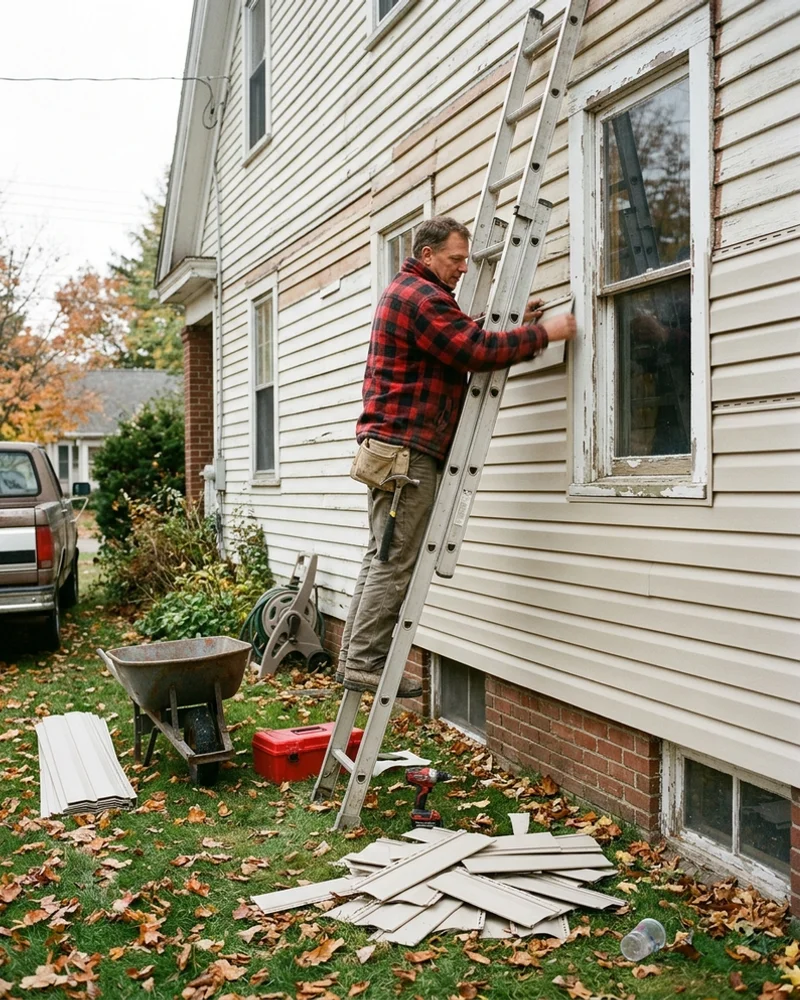
Yes, and it’s a big part of our work. We replace cracked, loose and missing panels one at a time and leave the rest of your siding in place. Matching is the tricky part, and three things get in the way:

  • Fading. Vinyl fades in the sun, so a brand-new panel can look brighter than the wall around it.
  • Discontinued colors. Manufacturers retire colors over the years.
  • Changed profiles. Panel shapes and lap sizes can shift between product lines.

We look for the closest color and profile available and tell you up front how close it will look. This Old House suggests another trick for DIYers: pull a faded piece from an out-of-sight spot, like the back of the house, and use it on the visible damage. Then the new panel goes where nobody looks.

Small repairs also tend to cost far less than a re-side. HomeGuide’s 2026 data puts vinyl repair at about $2 to $4 per square foot, or $200 to $400 for 100 square feet.

Our siding repair page covers how we open the wall and check behind the damage.

Vinyl vs. Other Siding Materials

Vinyl wins on upkeep and cost tier. Fiber cement siding gives a more solid, painted-wood look. Cedar is real wood.

Modern Exterior’s 2026 comparison shows how the first two stack up:

FactorVinylFiber cement
Installed cost per sq. ft.Roughly $3 to $8Roughly $6 to $13
Typical lifespan20 to 40 years30 to 50 years with upkeep

If you’re weighing them, read vinyl vs. fiber cement vs. wood siding. If your whole house needs new siding, see our siding replacement process.

Still not sure what fits your house? Ask us at your estimate, and we’ll talk through vinyl siding in Grand Rapids with real samples in your hands.
Common Problems We Fix

Problem 01

Faded, chalky panels

Years of sun break down the surface of older vinyl, especially on south and west walls. It can make repairs hard to match.

Problem 02

Cracks after a cold snap

Vinyl gets stiffer in the cold, so winter impacts crack panels that would have bent in summer.

Problem 03

Rippled or wavy walls

Panels nailed tight can't move, so they bulge in the heat. Re-hanging them right usually fixes it.

Problem 04

Panels popping loose

Unlocked courses let wind get underneath. A loose panel left alone can pull its neighbors off in the next storm.

Straight Price Ranges

How Much Does Vinyl Siding Cost in Grand Rapids?

Depends on wall area, panel thickness and grade, profile, trim and tear-off. Free estimate with a straight price range.

No figures over the phone
Factor 01

Wall area

We measure every wall, gable and dormer on site. More wall means more panels and more labor.

Factor 02

Panel thickness and grade

Thicker panels and insulated vinyl cost more than standard panels, and take hits better.

Factor 03

Profile

Standard lap, Dutch lap, board and batten and shake profiles are priced differently.

Factor 04

Trim and accessories

Corner posts, J-channel, undersill trim and window wraps add up on houses with a lot of openings.

Factor 05

Tear-off

Old siding comes off before new vinyl goes on. Multiple old layers take longer.

Factor 06

Repair matching

For repairs, sourcing the closest color and profile to your existing vinyl can affect the price.

Your number, in writing

We look at the house, measure, and give you a written estimate with a straight price range. It costs nothing and there is no pressure to sign.

Why Us for Vinyl

Why Grand Rapids Homeowners Call Us for Vinyl Siding

01

We do new vinyl and vinyl repairs

Some crews only want whole-house jobs. We'll replace three cracked panels just as gladly as we'll side the whole house.

02

Closest color and profile match

For repairs, we look for the closest color and profile to what's on your house and tell you how close it will look.

03

Installed to move

Vinyl expands and contracts a lot over a Michigan year. We hang it the way the manufacturer intends so it stays flat.

04

Straight talk on panel grades

We explain when thicker or insulated vinyl is worth it for your house and when standard panels will do the job.

Installer fitting a vinyl panel into J-channel around a window
Field Report / Vinyl

How Does Vinyl Siding Work?

  1. 01

    Pick the panel and color

    At the estimate we show you profiles, thicknesses and colors, and talk through standard vs. insulated vinyl for your house.

  2. 02

    Tear off and wrap

    Old siding comes off, we check the sheathing, then house wrap and flashing go on before any vinyl.

  3. 03

    Hang it loose, on purpose

    Starter strip, corner posts and J-channel first. Panels are nailed in the center of the slots so they can slide as temperatures swing.

  4. 04

    Trim out and clean up

    Undersill trim at windows, matching accessories, a full cleanup and a walk-around with you at the end.

Timing depends on the size of the job and Michigan weather. You get a timeline with your estimate.

Get a Free Estimate
Recent Work

Our Vinyl Siding Work

Real houses, real walls. Click any photo to see it larger.

Click any photo to enlarge
01 / Ranch house with chalky, faded vinyl siding and a cracked corner post
02 / The same ranch after new insulated vinyl siding and matching trim
03 / Board and batten vinyl on a gable above horizontal lap vinyl
04 / Replacement vinyl panels blended into an older gray wall after repair
Free Tool

How Much Siding Does Your House Need?

Estimate your wall area and squares of siding, including gables, windows and waste.

Try the Siding Calculator

Not sure what your vinyl job needs?

We'll look at it, tell you straight whether a repair is enough, and put the price range in writing.

From the Neighbors

What Customers Say About Our Vinyl Work

01
“Three other companies told us we needed all new siding. They replaced six cracked panels on the back of the house, matched the color about as close as you could ask, and left the rest alone.”
Karen V. Grand Rapids, MI / Siding Repair
02
“The estimate gave us an actual price range and listed the tear-off, house wrap and trim. When they found some soft sheathing under the old siding they showed us before fixing it. No surprises.”
Mike and Jen D. Grand Rapids, MI / Siding Replacement
03
“Our old cedar had woodpecker holes and a few split boards. They swapped the bad boards, stained them to blend in, and you honestly can't tell where the repair is.”
Tom R. Heritage Hill, Grand Rapids / Wood and Cedar Siding
Straight Answers

Vinyl Siding FAQs

01

Does vinyl siding crack in Michigan winters?

Vinyl gets more brittle in the cold, so a hit from ice, a snowblower or hail can crack it. Thicker panels and proper installation help, and cracked panels can be replaced one at a time.

02

Do you install insulated vinyl siding?

Yes, insulated (foam-backed) vinyl is one of the vinyl options we can quote. It's stiffer and takes impacts better than standard vinyl; we'll explain whether it makes sense for your house.

03

Can faded vinyl siding be painted?

It can, with the right prep and a vinyl-safe color, but dark colors can make vinyl warp. Sometimes replacing the faded walls is the better spend, and we'll tell you which.

04

Will a vinyl repair match my existing siding?

We look for the closest color and profile available. Older or faded vinyl may not match perfectly, and we'll tell you up front how close we can get.

05

Why is my vinyl siding wavy?

Usually the panels were nailed too tight to expand in summer heat. Re-hanging them with proper nailing often fixes it. If moisture behind the siding is the cause, we'll find and fix that too.

06

What vinyl siding profiles can I choose from?

Standard lap, Dutch lap, board and batten and shake-style panels are all options. Many Grand Rapids houses mix them, like lap on the walls and shakes or board and batten on the gables.

07

How long does vinyl siding last in Michigan?

Well-installed vinyl can last decades, but sun, hard impacts and poor installation shorten that. Our guide on how long siding lasts in Michigan covers what to expect.

08

Is vinyl the cheapest siding option?

Vinyl usually sits in the lowest cost tier compared with fiber cement and cedar. Exact pricing depends on the house, the panel grade and the trim, and we put it in writing at the free estimate.

09

Do you put vinyl over my old siding?

No. The old siding comes off first so we can check the wall and put on fresh wrap and flashing. Vinyl over old siding hides problems and tends to sit wavy.

Grand Rapids house with fresh lap siding and white trim in late afternoon light
Free Estimate / No Pressure

Ready for a Straight Price on Vinyl Siding?

Tell us about the house. We'll come out, take a look and give you a free written estimate with a straight price range.

  • 20+ years experience
  • Straight price ranges
  • Written estimate
Free Estimate