Why the Eaves Take the Worst of Michigan Winters
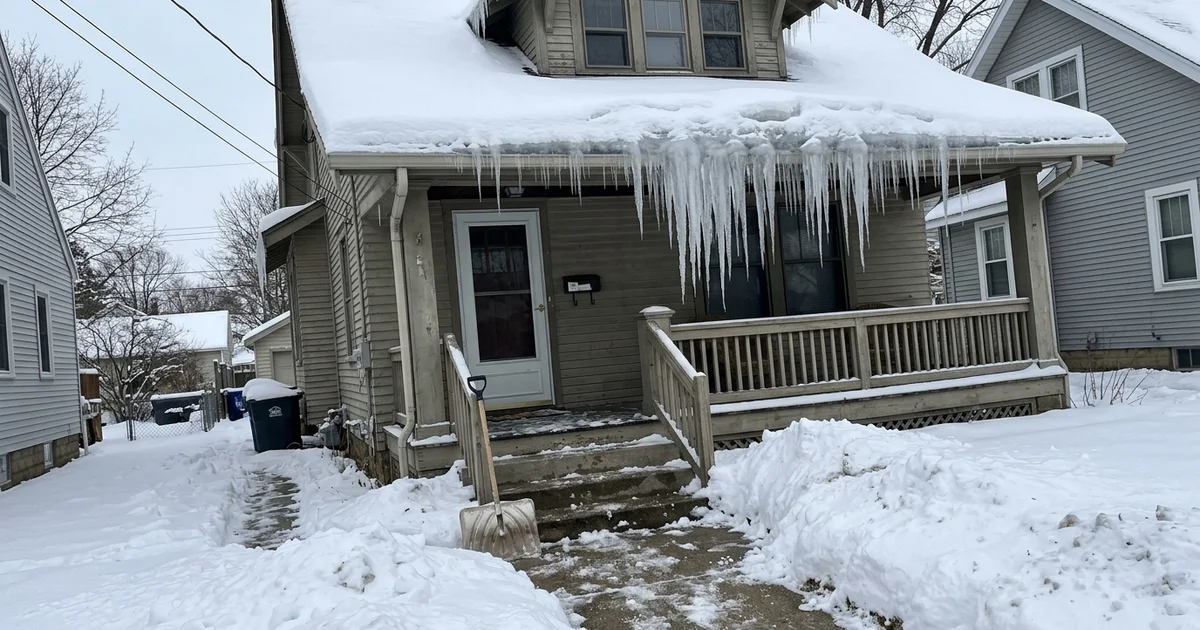
If you live in Grand Rapids, you’ve seen them: thick ridges of ice along the roof edge and icicles hanging off the gutters. Those are ice dams, and the roof gets all the attention. The soffit and fascia right below the ice usually take the real beating.
Every spring, we see the same pattern. Ice dam damage to the soffit and fascia stays hidden under snow all winter, then shows up the week it all melts.
West Michigan gives ice dams plenty of fuel. According to WZZM 13, Grand Rapids picked up 62.1 inches of snow in the 2024-25 winter, and that was nearly 6 inches below average.
That’s a lot of snow sitting on a lot of roofs.
We’ll walk through how ice dams form, how they damage the eaves, what soffit ventilation does and doesn’t do, and how repairs work once things thaw.
Quick definitions
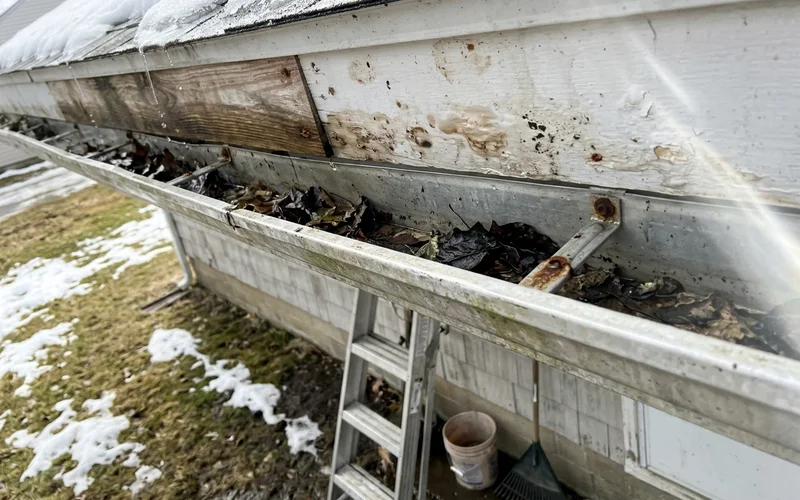
Fascia is the board along the roof edge where the gutters hang. Soffit is the panel under the overhang, between the fascia and the wall.
How Ice Dams Form
Ice dams form when heat from your house melts the snow on your roof and the water refreezes at the cold edge. The cycle runs like this:
- Warm air leaks into the attic and warms the roof deck.
- The bottom of the snow layer melts, and the meltwater runs down the roof.
- At the overhang, which sits outside the warm part of the house, the water freezes again.
- Day after day, a ridge of ice builds along the eave.
Once the dam is there, new meltwater has nowhere to go. It pools behind the ice and works its way back up under the shingles.
Lake-effect snow makes this a familiar story in West Michigan. WZZM 13 reported that Grand Rapids got 42.8 inches of lake-effect snow in the 2024-25 winter, compared with nearly 20 inches from regular storm systems. Heavy, frequent snowfall followed by sunny days and cold nights is exactly the cycle that feeds ice dams.
How Water Gets Into the Fascia and Soffit
Water trapped behind an ice dam soaks the fascia first, then keeps looking for weak spots:
- It runs behind the gutter and soaks the fascia board and the sub-fascia behind it.
- It drips into the soffit, staining and warping the panels, especially old plywood soffit.
- Over seasons it reaches the rafter tails, the ends of the roof framing.
- Heavy ice in the gutters pulls on the fascia and can tear gutters loose.
The damage often doesn’t show until spring: peeling paint, dark or soft wood, sagging soffit, gutters pulling away. Animals find the soft spots fast, too. A Michigan gutter contractor in Northville notes that damaged soffit lets squirrels, birds and wasps into the eave.
Water damage isn’t cheap once it reaches the house. The Insurance Information Institute estimates the average homeowner claim for water damage and freezing runs just over $3,000. Catching a stained soffit or a soft fascia board in spring is much easier on the budget than chasing a ceiling leak next January. The same meltwater can run down behind the wall, too, so it’s worth knowing the signs of hidden water damage behind your siding.
What Soffit Ventilation Does, and Doesn’t Do
Vented soffit lets cool air into the attic at the eaves, and that keeps the roof deck cold so snow doesn’t melt unevenly. Cool outside air comes in through the vented soffit (intake), flows up under the roof deck, and leaves near the peak through ridge or roof vents (exhaust). According to Building Science Corporation, the main job of attic ventilation in cold climates is to keep the roof cold and control ice dams.
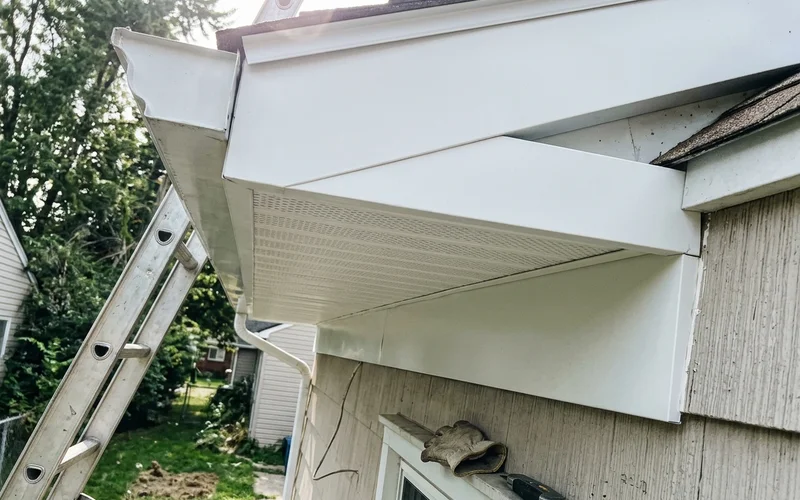
Here’s the honest part: vented soffit helps, but it isn’t a cure by itself. Ice dams come from heat getting into the attic. Ventilation, attic insulation and air sealing all work together. If your soffit vents are painted over, blocked by insulation or replaced with solid panels at some point, fixing that is a real improvement. But if the attic is losing a lot of heat, venting alone won’t solve it.
Skip the powered attic fans, too. University of Minnesota Extension advises against mechanical ventilation for ice dams, because a fan can pull more heated air up through the same ceiling leaks that cause the problem.
| Part of the system | What it does | Rule of thumb | Who usually handles it |
|---|---|---|---|
| Vented soffit | Lets cool air into the attic at the eaves | The common code ratio is 1 square foot of vent area per 300 square feet of attic floor, split between soffit and ridge | Siding and trim contractor |
| Ridge or roof vents | Lets air out near the peak | Provides the other half of that vent area | Roofer |
| Attic insulation and air sealing | Keeps house heat out of the attic | ENERGY STAR recommends R-49 to R-60 for Michigan homes, with air leaks sealed first | Insulation contractor |
| Ice and water barrier under shingles | Protects the roof deck at the eaves | Michigan’s residential code calls for it to reach at least 24 inches inside the exterior wall line where ice history exists | Roofer |
Repairing the Eaves After the Thaw
Most soffit and fascia repairs are best done after the thaw, once the wood can dry out and we can see the full extent of the damage. If something is loose or falling in the middle of winter, call sooner and we’ll make it safe.
Before we start, take a few photos of the stains, sagging and gutter damage. Rhino Shield, a Wisconsin exterior contractor, lists documenting the damage as an early step, and those photos help if you ever file a claim.
A typical repair looks like this:
- Take down the gutters along the damaged section.
- Remove the damaged fascia and check the sub-fascia and rafter tails.
- Replace any soft or rotted wood. We never wrap rotted wood in aluminum.
- Install new fascia or wrap solid fascia in aluminum.
- Replace stained or warped soffit, using vented panels where the attic needs intake air.
- Re-hang the gutters and check the drip edge.
When to Call a Roofer Too
We repair soffit and fascia, so if water got under the shingles, the roof may need a roofer’s attention as well. Call one if you see:
- Water stains on ceilings near exterior walls
- Wet or stained roof decking visible from the attic
- Damaged or missing shingles along the eaves
Roofers also check the ice barrier. Michigan’s residential code calls for a self-adhering membrane, or two cemented layers of underlayment, from the lowest edge of the roof to at least 24 inches inside the exterior wall line where ice has been a problem. Older homes often don’t have it.
We’re a siding contractor in Grand Rapids, not a roofer, but we’ll tell you if we see signs of roof damage while we’re working on the eaves. For ice dam damage repair on your soffit and fascia, request a free estimate and we’ll take a look once the weather allows.